Ranked: 8 Edible Mushroom Automation Machines by Bag Format and Throughput Fit
There is no single best edible mushroom automation machine, and buyers who start with that question usually end up comparing the wrong shortlist. The first filter is the bag itself — flat width, bag length and maximum filling height. The second is verified throughput expressed in bags per hour or per day. Applied in that order, the two filters remove most of a catalogue before price, brand or lead time is even discussed.
This ranking orders eight machines by how well each one fits a defined cultivation scenario. All eight are catalogue models from Changxing Edible Mushroom Machinery (Neihuang County Changxing Biological Machinery Equipment Co., Ltd., founded 2009, Henan, China), because verified bag-format, throughput, power and control specifications were available for these models. The order is editorial and scenario-based. It makes no claim about how these machines compare with other manufacturers' products, and no competitor specification has been assumed anywhere in this article.
Read the list as a decision path, not a league table. Rank 1 covers the widest range of continuous industrial bagging work. Each step down narrows the fit to a specific bag format, a specific module, or an upstream step that has to exist before bagging can begin. For a small farm or a single-format operation, the better purchase is often further down the list.
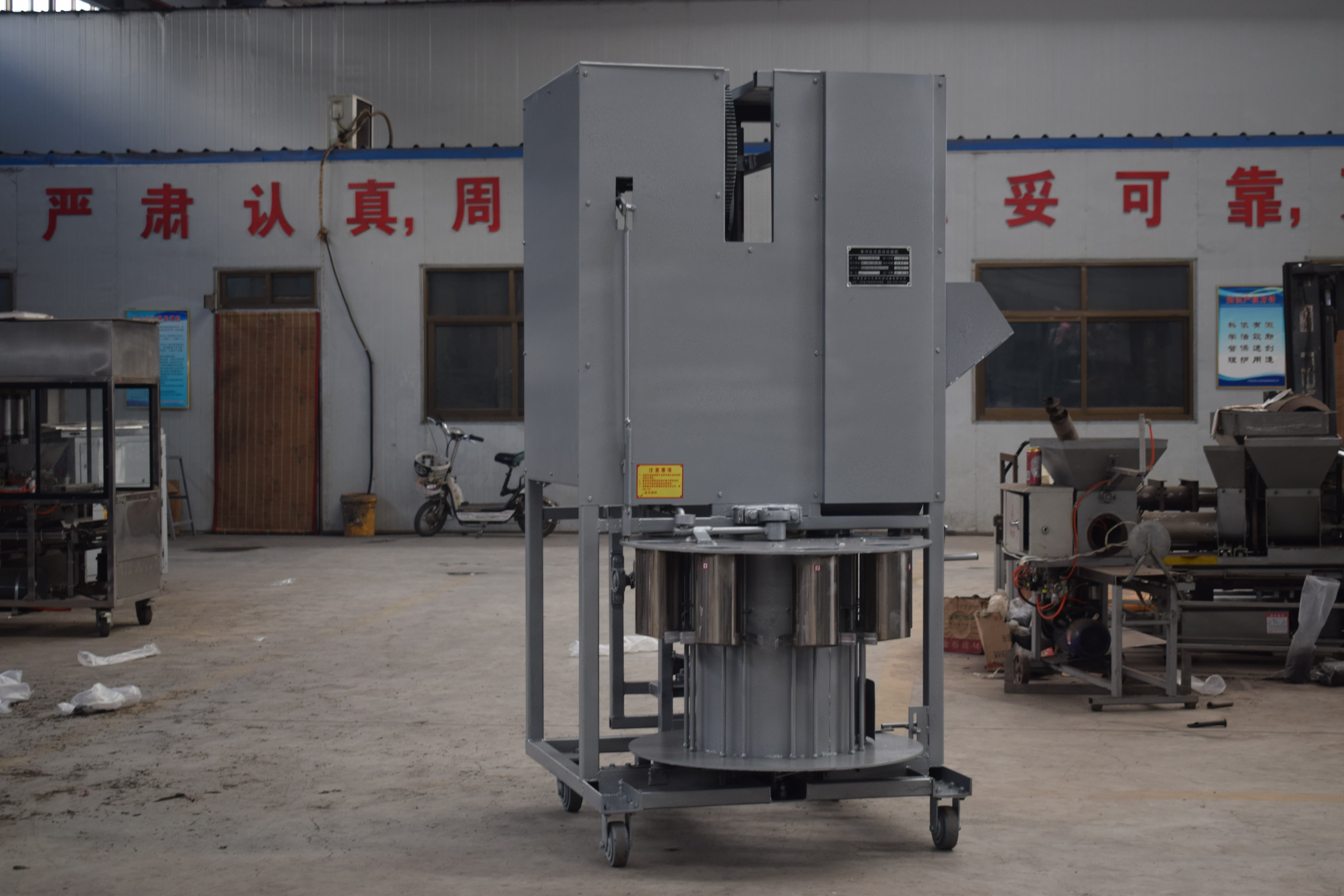
Cover: stamping bagging in an indoor workshop. Bag length, flat width and maximum filling height are the first three numbers that decide which machine is relevant.
Problem Definition: Why “Which Machine Is Best” Produces a Bad Shortlist
A mushroom bagging machine is mechanically matched to the bag. A fast machine working outside your bag's format range produces nothing usable, and a machine bought for the wrong fill height forces a change of growing programme rather than a change of setting. Three numbers do most of the filtering: flat width, bag length and maximum filling height.
The second filter is throughput measured in the same unit as the production plan. Some specifications are quoted per day (for example 15,000 bags/day on the 2-Station Production Line), others per hour (400–600 bags/h, 800 bags/h, 1,200–1,500 bags/h), and inoculation is quoted separately again (2,500–2,800 bags/h). Comparing a per-day figure against a per-hour figure without converting is one of the most common sourcing errors in this category.
The third filter is less visible: utilities and building conditions. Continuous indoor bagging in a documented South Korean project requires a 380V three-phase supply, a stable foundation and a trained operator. The automated CX-S-JWZ cell requires compressed air at 0.5–0.7 MPa and 1,500 L/min, plus a twin-core overhead clear height of at least 2,200 mm. Some models are rated for 0–40°C with IP54 protection. A machine that fits the bag but not the building is still a mismatch.
Industry Background: Bagging Throughput Has Become a Capital Decision
The global mushroom equipment market was valued at USD 3.8 billion in 2025, and China accounted for 42.3% of that revenue, according to Dataintelo's market report on mushroom equipment. China's edible mushroom industry total output value was reported at CNY 380 billion in 2024, cited from Ministry of Agriculture data via People's Daily. In that context, bagging is no longer a farm-level chore; it is the pacing step of an industrial line.
Third-party product data for industrial automatic bagging and capping equipment lists 1200–1400 bags/hour. That figure sits in the same band as Changxing's automated CX-S-JWZ-automation cell and the CX-ZDTHJ ring-sealing, capping and tray-loading machine, both specified at a maximum of 1200–1400 pcs/h. Above that band, output stops being a machine question and becomes a line-configuration question.
Compliance has moved into the same conversation. In the European Union, machinery is covered by CE marking under the Machinery Directive and the EMC Directive. In the United States, FDA current good manufacturing practice (21 CFR Part 117) requires equipment used in manufacturing, processing, packing or holding food to be designed and maintained so that it is adequately cleanable and protects against contamination; 21 CFR Part 112 addresses equipment and tools that contact covered produce; and NSF/ANSI 2 sets minimum food protection and sanitation requirements for materials, design, fabrication, construction and performance of food handling and processing equipment. These are design questions to raise in an RFQ, not labels to assume from a product photo.
Inclusion Criteria: How This Ranking Was Built
A machine entered the list only if all of the following were satisfied:
- Published bag-format data (length, flat width, maximum filling height), or published raw-material and screen data for upstream equipment.
- Published throughput in a stated unit — bags per hour, bags per day, pieces per hour or tonnes per hour.
- Published power and voltage, from 1.5 kW at AC220V or AC380V 50Hz up to 22 kW at AC380V 50Hz.
- Published drive and control detail — high-precision mechanical program control, PLC with servo and closed-loop stepper, or a two-stage gear drive with friction clutch and foot pedal.
- A distinct scenario family: full bagging and tying line, automated bagging cell, inoculation, four separate bag formats, and upstream substrate crushing.
Excluded: any model without a published specification, and any statement about certification, price or competitor performance.
The Ranking: 8 Machines Ordered by Scenario Fit
1. Automatic Edible Mushroom Bagging & Sealing Line (2-Station Production Line)
It ranks first because it is the only entry that closes the loop from raw material to a tied bag inside one control system. Verified data: capacity 15,000 bags/day; bag size length 14–22 cm, width 28–63 cm; AC380V 50Hz; integrated electrical control box supporting one-key start or independent operation of each unit; process flow of shovel feeding → mixing → conveying → distributing → bagging → tying → bag confluence; optional downstream equipment including an automatic ring sleeving machine, automatic notch inserting machine, integrated bagging and tying machine and tray loading machine; line setup and workshop layout configurable to daily output and site conditions.
Why it is not always the answer: a line fixes the pace of everything downstream. If your daily output sits far below the stated figure, or your bag falls outside the stated range, the single machines ranked below deliver the same bag with less capital exposure and less changeover rigidity.
2. Automatic Bagging, Nesting, Stick-Inserting & Basket-Loading Machine (CX-S-JWZ-automation)
Second because of automation density: bagging, nesting, stick insertion and basket loading run as one cyclic sequence, which makes this the only entry in the eight that also performs basket handling. Verified data: 12 kW, AC380V 50Hz; air pressure 0.5–0.7 MPa at 1,500 L/min; maximum 1200–1400 pcs/h; bagging height accuracy ±10 mm; repeat positioning accuracy ±2 mm; pass rate ≥97%; net weight 1,800 kg; overall dimension L4250 × W2800 × H1950 mm with twin-core overhead height ≥2,200 mm; Xinje high-speed motion axis PLC, Xinje high-inertia servo motor and closed-loop stepper motors; HIWIN linear guide with TBI ball screw and Airtac cylinders and modules; SICK laser detection for bag, nesting and stick insertion; manual roll bag placement; twin-core automatic substrate feeding; vibrating bowl stick feeder; automatic basket discharge.
Limits to verify first: 1,500 L/min of compressed air is a compressor decision, not an accessory; the clear height and footprint have to exist in the building; and bag format is not published in this specification set, so it must be confirmed before ordering. Adjacent downstream equipment — the CX-ZDTHJ ring sealing, capping and tray loading machine (12 kW, max 1200–1400 pcs/h, IP54, 0–40°C) — sits outside this eight-item ranking but belongs to the same line architecture.
3. Dual-Station Automatic Mushroom Inoculation Machine (CX-JZJ)
Third because inoculation is the bottleneck that appears immediately after bagging is solved. Verified data: 2.5 kW, AC380V 50Hz; capacity 2,500–2,800 bags/h; spawn hole Φ25–Φ30 mm with 4 or 3 holes per side; hole spacing 95/105 mm; net weight 850 kg; L2720 × W1020 × H1700 mm; bag flat width 14–22 cm, length 40–60 cm; Xinje high-speed motion axis PLC; hybrid stepper motors; KBS linear bearings with HIWIN linear guide rails; Autonics, Siemens and Panasonic sensors; sterilization by alcohol wiping, UV disinfection and an FFU class 100 laminar flow hood; full stainless steel body with machined internal parts and external sheet metal components; casters; flow of manual bag loading → disinfection → punching → inoculation → seed pushing → leveling → bag discharging.
Fit: bag cultivation in the 14–22 cm flat-width, 40–60 cm length band. A 30–32 cm square bag falls outside this range.
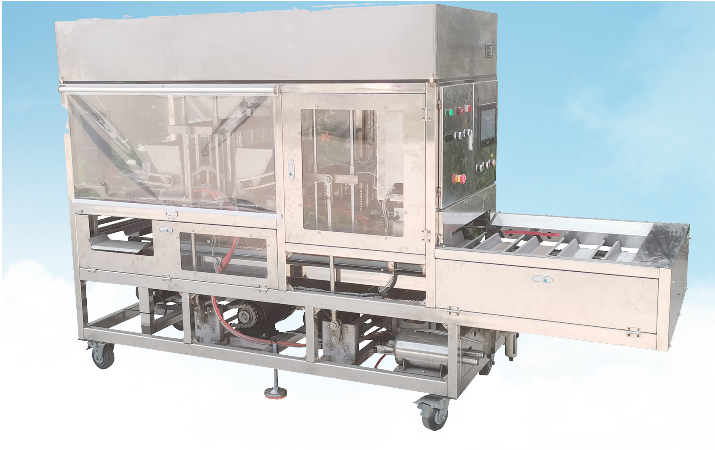
Rank 3: dual-station inoculation, specified for 2,500–2,800 bags/h and bags of 14–22 cm flat width.
4. Automatic Stamping Oyster Mushroom Bagging Machine (GZD15-24)
Fourth because it defines the long, medium-fill bag format used in standardized oyster production. Verified data: 3 kW, AC380V 50Hz; capacity 800 bags/h; bag size length 45–50 cm, width 15–22 cm, maximum filling height ≤32 cm; net weight 730 kg; L1400 × W1280 × H2300 mm; IP54 protection; working temperature 0–40°C; high-precision mechanical program control; flow of feeding → dropping → stamping and holding bag → discharging; universal and directional casters.
Fit: a repeatable 45–50 cm bag with roughly one-third of the bag left as headspace. 800 bags/h is a per-shift planning basis, not a per-day one, and should be matched to the number of bagging stations you intend to run.
5. Automatic Stamping Mushroom Bagging Machine (ZD15-24)
Fifth because it is the highest-output bagging-only machine in this set, but only inside a shallow fill height. Verified data: 3 kW, AC380V 50Hz; capacity 1,200–1,500 bags/h; bag flat width 15–22 cm; maximum filling height ≤19 cm; net weight 530 kg; L1400 × W1280 × H1650 mm; high-precision mechanical program control; stainless steel sleeve for quick and safe bag loading; compatible with an automatic bag receiving conveyor; universal and directional casters.
Fit: short or pillow-style bags where bag count matters more than substrate volume per bag. It cannot produce the 32 cm fill of the GZD15-24 or the 50 cm fill of the square-bag machine further down this list.
6. Square Bag Stamping Bagging Machine (CX-FD)
Sixth because it owns the square-bag format outright. Verified data: 3 kW, AC380V 50Hz; capacity 600–800 bags/h; bag size length 40–50 cm, width 30–32 cm with maximum filling height ≤50 cm; net weight 420 kg; L1500 × W1420 × H1800 mm; high-precision mechanical program control; automatic 6-hole punching for mushroom bags; universal and directional casters.
Fit: the only entry in this ranking that handles a 30–32 cm width and the deepest fill (≤50 cm), and the integrated punching removes a separate downstream step. It has the lowest throughput of the three stamping baggers and the highest substrate volume per bag, so the two figures have to be read together.

Rank 6: square-bag stamping, 40–50 cm length and 30–32 cm width, filling height up to 50 cm, with automatic 6-hole punching.
7. Small Friction Clutch Mushroom Bagging Machine (ZD-3)
Seventh — and the most under-rated entry on the list. Verified data: 1.5 kW; AC220V or AC380V 50Hz; capacity 400–600 bags/h; bag length 28–60 cm, width 12–25 cm, maximum filling height ≤45 cm; carbon steel or SS304 construction; two-stage gear drive with friction clutch and foot pedal control, with an electromagnetic clutch alternative available (TZD-1); working temperature 0–40°C; IP54 protection.
Fit: it has the widest bag-format band of any single bagging machine here — 28–60 cm length and 12–25 cm width at up to 45 cm fill — at the lowest power draw in the ranking. The foot-pedal cycle suits variable bags, small batches and multi-variety farms that change format several times a week. The trade-off is explicit: 400–600 bags/h is manual-cycle throughput. For an operation bagging a few hundred to a few thousand bags a day, that is the right amount of machine; a 12 kW automated cell would sit idle.
8. 500-Type Wood Crusher (QF500)
Eighth because it is upstream, and upstream is where most line problems actually start. Verified data: 22 kW, AC380V 50Hz; capacity 1 ton/h; net weight 160 kg; overall dimension 900 × 730 × 880 mm; suitable raw material mixed wood and logs of φ ≤140 mm; replaceable screen mesh with 8–20 mm aperture; knife disc plus hammer piece design for one-step slicing and crushing; electric motor or diesel engine drive option; process flow of feeding → crushing → discharging; carbon steel and wear-resistant alloy steel construction.
Fit: particle size is set by the 8–20 mm screen, and 1 ton/h is the input figure the rest of the line has to be planned against. A bagging line cannot outrun its substrate prep, and at 22 kW this is the largest single electrical load in the ranking.
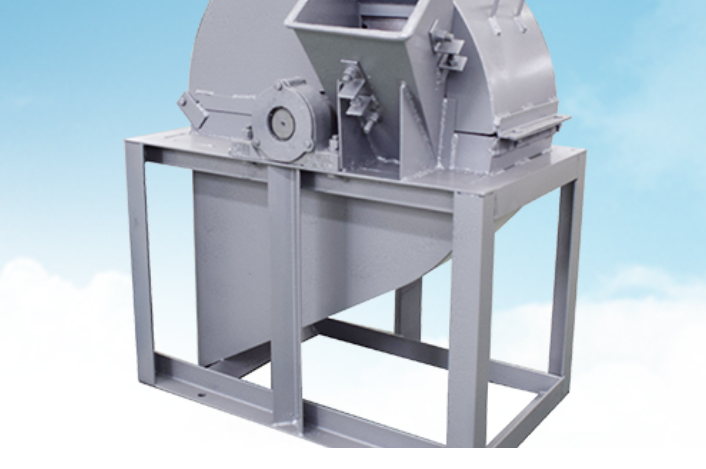
Rank 8: upstream crushing. Screen aperture of 8–20 mm is what determines particle size before substrate ever reaches a bag.
When a Lower-Ranked Machine Is the Better Pick
Small farms and cooperatives. A 400–600 bags/h friction-clutch machine at 1.5 kW with a 220V option can be commissioned where a 12 kW automated cell cannot — on single-phase-friendly power, without compressed air, and without a ceiling clear height requirement. Capital, electrical capacity and maintenance skill all favour the lower rank.
Pillow and short-bag packaging. If the product is a short bag, the ZD15-24 at 1,200–1,500 bags/h and ≤19 cm fill beats every larger machine on count. If the product is a standard 32 cm fill, the GZD15-24 is the correct answer at 800 bags/h. Matching the fill height is worth more than any throughput difference.
Multi-variety operations. No machine in this list covers both 15–22 cm flat width and 30–32 cm square width. The realistic choice is either one dedicated machine per format, or one wide-band machine (the ZD-3 spans 28–60 cm length and 12–25 cm width at ≤45 cm fill) accepted at 400–600 bags/h. Buying the widest-throughput machine and then changing bags around it is the most expensive version of this decision.
Step-by-Step: Applying This Ranking to Your Own Project
- Fix the bag. Write down flat width, bag length and target filling height. This alone removes most of the list.
- Convert your output to the same unit as the specification. Bags per shift and bags per day are not comparable with bags per hour until you convert.
- Check fill height against variety. A ≤19 cm, ≤32 cm, ≤45 cm and ≤50 cm machine are four different growing programmes, not four price points.
- Check the utilities before the price. 380V three-phase, stable foundation, trained operator, and — for the automated cell — 0.5–0.7 MPa at 1,500 L/min of air.
- Check the building. Footprint from 900 × 730 mm (QF500) up to 4250 × 2800 mm (CX-S-JWZ), and clear heights of 2,200 mm or more on the automated equipment.
- Check material and environment. Carbon steel or SS304, IP54 protection and a 0–40°C working range where those are specified.
- Map upstream and downstream modules. Crushing and screening before bagging; tying, ring sleeving, capping, punching or tray loading after it. An unmatched module, not the bagger, is usually what limits a new line.
Use Cases: Three Projects That Sort the Same List Differently
South Korea — multi-variety automatic production system. A documented project covers bagging for oyster mushroom, shiitake, black fungus and pearl oyster in continuous operation, normal temperature, indoor workshop conditions, in automatic operation mode. Stated requirements are a 380V three-phase supply, a stable foundation and a trained operator; supporting equipment includes an automatic bagging manipulator, mixer, conveyor, material distributor and basket loader. This is the profile that sorts ranks 1, 2 and 3 to the top.
Malaysia — integrated line at scale. A second documented project covers enoki, king oyster, pearl oyster, shiitake and snow fungus, integrating a mixer, elevator, material distributor and automatic bagging and tying machine, with a daily output of nearly 80,000 bags. Requirements again include a 380V three-phase supply, a stable flat foundation and trained personnel, plus compressed air where pneumatic equipment is used. At that output the ranking is effectively decided at rank 1, and the CX-S-JWZ cell becomes a basket-handling decision rather than a bagging one.
Repeat export customers. Published case data covering customers in South Korea, Malaysia, Russia and the United Kingdom records 20+ units annual export volume over a five-year duration, with stable operation, high efficiency and bagging speed above 1,000 bags per hour in operation. That figure is a useful sanity check: it sits between the single bagging machines and the automated cell, which is exactly where most first lines are built.
Comparison Table
| Rank | Machine (model) | Verified bag format | Verified output | Power | Best-fit scenario |
|---|---|---|---|---|---|
| 1 | Automatic Bagging & Sealing Line (2-Station Production Line) | Length 14–22 cm, width 28–63 cm | 15,000 bags/day | AC380V 50Hz | Mixing, bagging and tying in one controlled flow |
| 2 | Bagging, Nesting, Stick-Inserting & Basket-Loading (CX-S-JWZ-automation) | Not stated in this specification set | Max 1200–1400 pcs/h | 12 kW, AC380V 50Hz | High-automation cells that include basket handling |
| 3 | Dual-Station Inoculation Machine (CX-JZJ) | Flat width 14–22 cm, length 40–60 cm | 2,500–2,800 bags/h | 2.5 kW, AC380V 50Hz | Inoculation stage after bagging |
| 4 | Stamping Oyster Mushroom Bagging Machine (GZD15-24) | Length 45–50 cm, width 15–22 cm, fill ≤32 cm | 800 bags/h | 3 kW, AC380V 50Hz | Standard oyster bags, IP54, 0–40°C |
| 5 | Stamping Mushroom Bagging Machine (ZD15-24) | Flat width 15–22 cm, fill ≤19 cm | 1,200–1,500 bags/h | 3 kW, AC380V 50Hz | Short and pillow-style bags at high count |
| 6 | Square Bag Stamping Bagging Machine (CX-FD) | Length 40–50 cm, width 30–32 cm, fill ≤50 cm | 600–800 bags/h | 3 kW, AC380V 50Hz | Square bags with automatic 6-hole punching |
| 7 | Small Friction Clutch Bagging Machine (ZD-3) | Length 28–60 cm, width 12–25 cm, fill ≤45 cm | 400–600 bags/h | 1.5 kW, AC220V or AC380V 50Hz | Small farms, multi-variety, foot-pedal cycling |
| 8 | 500-Type Wood Crusher (QF500) | Mixed wood and logs φ ≤140 mm; screen 8–20 mm | 1 ton/h | 22 kW, AC380V 50Hz | Upstream substrate preparation before bagging |
FAQ
What compliance documentation should be requested before ordering?
Compliance depends on the destination market, and no conformity claim should be assumed from a product page. In the European Union, machinery is covered by CE marking under the Machinery Directive and the EMC Directive. In the United States, FDA current good manufacturing practice (21 CFR Part 117) requires equipment used in manufacturing, processing, packing or holding food to be designed and maintained so that it is adequately cleanable and protects against contamination; 21 CFR Part 112 addresses equipment and tools intended or likely to contact covered produce; and NSF/ANSI 2 sets minimum food protection and sanitation requirements for materials, design, fabrication, construction and performance of food handling and processing equipment. Because applicability is jurisdiction- and machine-specific, the practical step is to request the declaration of conformity and the food-contact material documentation for the exact model and voltage variant being purchased, and to add cleanability, seam access and cleaning procedure to the factory acceptance test.
Can one machine handle 15–22 cm flat-width bags and 30–32 cm square bags?
No machine in this ranking covers both formats. The ZD15-24 and GZD15-24 are specified for 15–22 cm flat width, with maximum filling heights of ≤19 cm and ≤32 cm respectively. The CX-FD is specified for 30–32 cm width and 40–50 cm length with filling height up to 50 cm. The ZD-3 spans 12–25 cm width and 28–60 cm length with filling height ≤45 cm at 400–600 bags/h. The CX-JZJ inoculator is specified for 14–22 cm flat width and 40–60 cm length. Multi-variety operations therefore either dedicate one machine per format or accept the lower throughput of the widest-band machine.
What drives cost when no list prices are published?
The verified sources behind this article contain no machine prices, total cost of ownership figures or energy-cost data, so any specific number should come from a quotation rather than an article. What can be compared is the configuration that drives a quotation: automation level (high-precision mechanical program control on the GZD15-24, ZD15-24 and CX-FD versus PLC, servo and closed-loop stepper control on the CX-S-JWZ-automation and CX-ZDTHJ), pneumatic demand (0.5–0.7 MPa at 1,500 L/min on the automated cell, which requires compressor capacity), electrical load (1.5 kW on the ZD-3 up to 22 kW on the QF500), material choice (carbon steel or SS304), and the number of modules in the line (ring sleeving, notch inserting, bagging and tying, tray loading).
Can a buyer test a machine on their own substrate before ordering?
Validation steps are part of the reported commercial terms: minimum order quantity of 1 unit, ODM and R&D customization covering equipment, equipment dimensions, production efficiency, applicable mushroom varieties and bagging machine configuration, and 100% testing before delivery under an ISO-standard quality control process. Published case data records 20+ units annual export volume over a five-year duration with customers in South Korea, Malaysia, Russia and the United Kingdom, stable operation and bagging speed above 1,000 bags per hour, and factory inspection visits are documented. The most useful first step is to send bag length, flat width and target filling height together with the daily bag target, so the configuration can be checked against the format ranges above before a test is scheduled.
What lead time and production capacity should be planned for?
Reported lead time is 30–55 days, with monthly capacity of 1,000 units and annual output of 10,000 units from a 20,000 m² facility with 130 employees and a 25-engineer R&D team; 60% of output is exported to South Korea, Malaysia, Central Asia, Europe and Russia. Utility preparation should run in parallel with that lead time rather than after it: a 380V three-phase supply, a stable foundation and a trained operator are the stated requirements for continuous indoor bagging, and pneumatic equipment adds a compressed-air supply. To start a configuration review and quotation, send your bag format and target output to Changxing Edible Mushroom Machinery at nhchangxing@outlook.com or +86 13103721233 (WhatsApp available).
Conclusion
Ranking edible mushroom automation equipment by bag format and throughput produces a different shortlist from ranking it by headline speed. The 2-Station Production Line earns first place because it closes the loop from raw material to a tied bag at 15,000 bags/day. The CX-S-JWZ-automation cell earns second because it also handles basket loading, at the cost of 1,500 L/min of air and a 2,200 mm clear height. Inoculation, the four bag formats and upstream crushing follow — and each one wins outright in the scenario it was built for.
The practical conclusion is that bag format and fill height should be fixed before throughput, and throughput should be fixed before price. A 400–600 bags/h machine at 1.5 kW is not a compromise for a small farm; it is the correct specification. A 30–32 cm square bag is not a setting on a 15–22 cm machine; it is a different machine. Once those two facts are accepted, the ranking becomes a shortlist rather than a comparison.
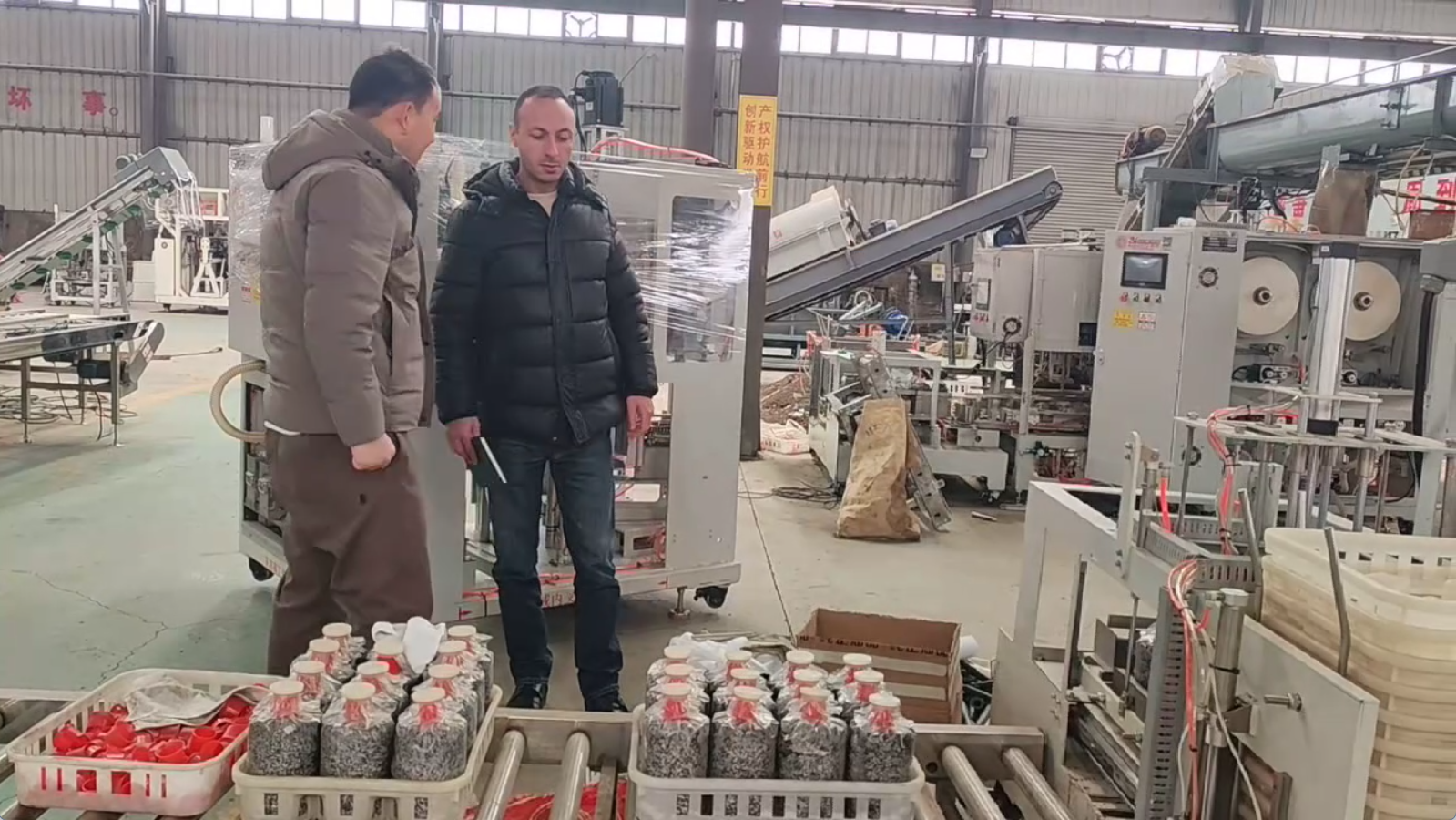
Factory inspection visits are part of the documented buyer validation path before a line is ordered.
Next step: send your bag length, flat width, target filling height and daily bag target for a configuration review. Changxing Edible Mushroom Machinery (Neihuang County Changxing Biological Machinery Equipment Co., Ltd., founded 2009) manufactures edible mushroom automation equipment from a 20,000 m² facility in Henan, China, with MOQ 1 unit, lead time 30–55 days and remote after-sales support.
Email: nhchangxing@outlook.com | Tel / WhatsApp: +86 13103721233 | Address: Henan Neihuang, China | www.automushmachinery.com
Have Questions or Need More Details?
Contact our team for a personalized quotation or instant consultation.
Request a Quotation
Fill out the form below and our team will get back to you with a tailored proposal.
WhatsApp Direct Chat
Prefer to chat in real-time? Message us on WhatsApp for instant assistance & quick answers.
- Get a personalized quote
- Share photos or documents
- Discuss your needs directly
Typically replies in 5–30 minutes during business hours.