Evaluating Edible Mushroom Automation Equipment: A Technical & Commercial Benchmark for 2026
Edible mushroom automation equipment is no longer a single-machine purchase; it is a decision that shapes substrate preparation, bagging, sterilization, inoculation, cultivation logistics, and post-harvest recovery for the life of a farm. For industrial buyers in the Evaluation stage, the practical question is not simply “which machine is faster,” but “which supplier and which production line configuration will perform reliably at my target daily output, across my chosen mushroom varieties, under my labor and energy constraints.” This guide provides a technical and commercial framework for comparing edible mushroom automation equipment suppliers in 2026, using Changxing Edible Mushroom Machinery as a reference supplier with verifiable product, certification, and project data.
Why the Edible Mushroom Equipment Market Is Under Evaluation Pressure in 2026
The global mushroom equipment market is projected to grow from USD 3.8 billion in 2025 to USD 7.2 billion by 2033, with Asia-Pacific accounting for 42.3% of revenue in 2025. China’s edible mushroom industry value exceeded RMB 380 billion (approximately USD 53 billion) in 2024, representing more than 70% of global output. These figures help explain why equipment selection has shifted from price-based buying to capability-based evaluation.
As mushroom farms scale and labor costs rise, buyers must compare integrated production lines, semi-automatic bagging machines, high-speed shiitake baggers, sterilization systems, inoculation equipment, and downstream automation such as ring sleeving, basket loading, and warehouse shelving. The ability to evaluate equipment across the entire substrate-to-fruiting workflow, rather than comparing isolated machines, is the core competitive skill in 2026 procurement.
Understanding the Equipment Stack: From Raw Material to Finished Bags
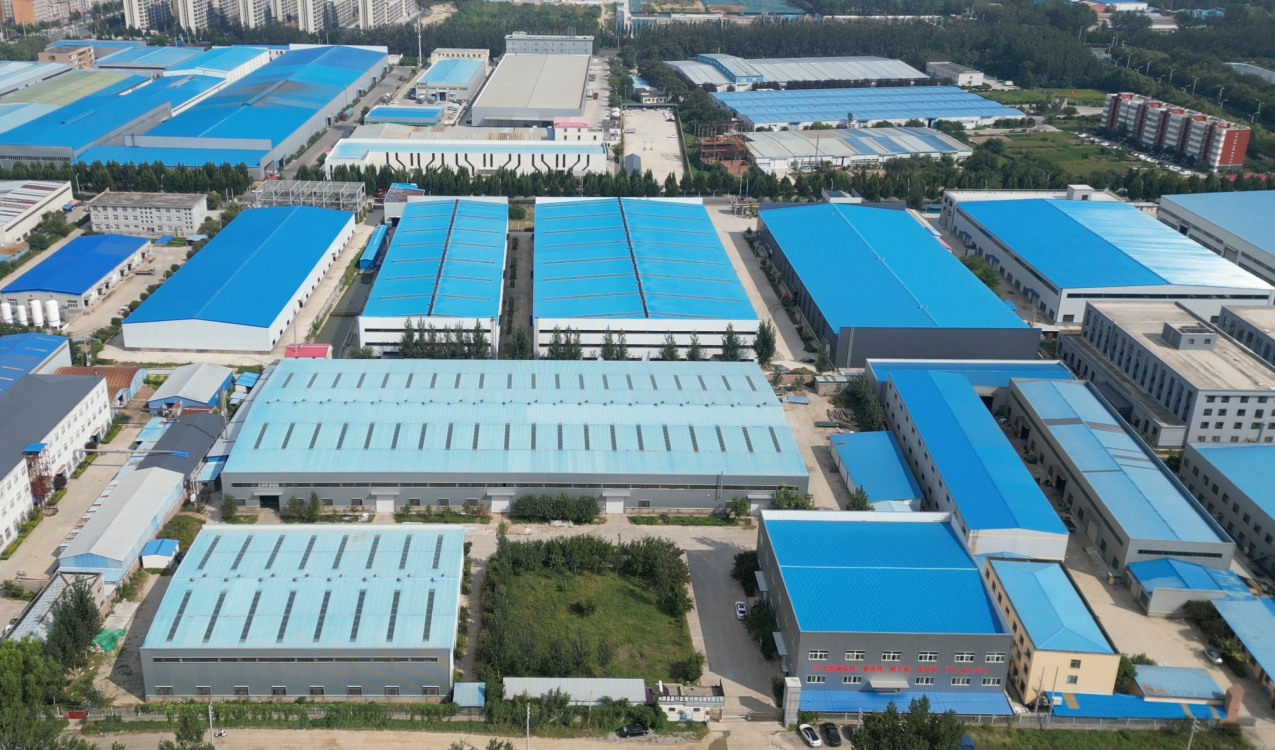
Edible mushroom automation equipment covers the complete substrate processing chain. Changxing Edible Mushroom Machinery, founded in 2009 and headquartered in Neihuang County, Henan, China, manufactures equipment for shiitake, oyster mushroom, black fungus, enoki, king oyster, black termitomyces, white fungus, seafood mushroom, and agrocybe aegerita cultivation. The company operates a 20,000m² facility with 130 employees, including 25 R&D engineers, and produces a range of machinery enabled for both export and domestic projects. Changxing exports approximately 60% of its output to markets including South Korea, Malaysia, Central Asia, Europe, and Russia.
To evaluate equipment properly, industrial buyers should decompose the production process into the following stages:
- Raw material processing: wood crushers, sawdust crushers, corn cob crushers, and screening equipment that prepare substrate materials to consistent particle size. Changxing’s QF500 and QF600 wood crushers, FS60-50 corn cob crusher, and GTS rotary trommel screen illustrate the range of pre-treatment machinery.
- Mixing and moisture management: large-capacity mixers and compost turners that ensure uniform substrate composition. Model CXJB-100 has a 0.8-ton capacity and 4kW power, while the larger CXJB series reaches mixing capacities from 0.8 to 10 tons.
- Bagging, filling, and tying: the core of substrate automation, including semi-automatic mushroom bag filling machines, automatic mushroom baggers, integrated bagging and tying machines, and high-speed shiitake/oyster mushroom bagging machines. Changxing’s ZD15-24 double-stamping bagging machine, for example, operates at 1000–1500 bags per hour with a 3kW motor, while the CX-GJZ high-speed shiitake machine reaches 650–750 bags per hour in double-film mode and 1000–1200 bags per hour in standard mode.
- Sterilization preparation: atmospheric sterilization cabinets and related equipment, though in this document the certified product scope focuses on bagging and tying machinery under CE certification.
- Inoculation: punching and inoculation machines with laminar flow protection. The CJZQ-1 automatic inoculation machine processes 1240 bags per hour with 100-class FFU laminar flow and UV+ozone disinfection; the CX-JZJ dual-station unit handles 2500–2800 bags per hour.
- Cultivation logistics: nesting, stick-inserting, ring-sleeving, basket loading, basket turning, shelving, and unloading equipment that reduce manual handling in grow rooms.
- Spent bag processing: bag breaking and separation lines for post-harvest recycling.
Understanding these stages helps buyers map each supplier’s equipment catalog to their own production bottlenecks, rather than comparing products in isolation.
Evaluation Criteria for Edible Mushroom Automation Equipment
Industrial buyers evaluating edible mushroom automation equipment should assess at least eight dimensions, each with a different weight depending on farm scale, species mix, labor cost, and target market regulations.
1. Production capacity and output match
Capacity is the most visible specification but also the most often misapplied. Changxing’s production lines demonstrate output tiers that buyers can benchmark: a 2-Station Production Line reaches 15,000 bags per day; a 4-Station Production Line reaches 25,000 bags per day; and a 4-Station Black Termitomyces line reaches 50,000 bags per day. Semi-automatic bagging machines range from 400–600 bags per hour (ZD-3) to 1000–1500 bags per hour (ZD15-24). Buyers should calculate shift hours, bag size, and species requirements to determine which tier is appropriate.
2. Bag size and species compatibility
Mushroom bags vary widely across species and cultivation methods. The ZD15-24 accepts bags 30–38 cm in length and 14–22 cm in width; the TZD series accepts longer bags of 28–60 cm length and 12–25 cm width; the CX-FD square bag machine handles bags up to 50 cm in height; the GZD15-24 oyster mushroom machine handles lengths of 45–50 cm. A supplier’s compatibility range is a practical indicator of how well it understands different cultivation systems.
3. Control system and automation level
Buyers evaluating “intelligent” equipment should look for specific control architectures: PLC-based control, servo systems, linear guides, screw drives, sensor networks, and touchscreen interfaces. Changxing’s high-end machines use Xinje high-speed motion axis PLCs, Xinje servo motors, HIWIN linear guides, TBI ball screws, SICK sensors, and, in the case of the CX-S-JWZ-automation machine, Airtac cylinders and laser detection. These components are not just premium names; they determine repeat positioning accuracy (±2mm), bagging height accuracy (±10mm), and pass rate (≥97%) in integrated equipment.
4. Build quality, materials, and maintenance
Equipment frames are commonly carbon steel, while product-contact parts should be stainless steel (SS304). Changxing’s machine specifications show a consistent split: carbon steel for structural framing, SS304 for sleeves, chutes, and product-contact surfaces. Mixers use wear-resistant steel and laser-cut components. Buyers should verify which parts touch substrate, whether washdown is practical, and whether wear parts are replaceable.
5. Certification and regulatory compliance
For exports to Europe, edible mushroom automation equipment must comply with the EU Machinery Directive (2006/42/EC) and the EMC Directive (2014/30/EU). Changxing obtained CE Certificate No. M.2026.206.C135928 from UDEM in March 2026, covering mushroom bagging and tying machines, with validity through March 2031. The certified standards include EN ISO 12100:2010, EN 60204-1:2018+A1:2025, EN IEC 61000-6-2:2019, and EN IEC 61000-6-4:2019. Buyers should ask for the certificate number and verify scope rather than accepting a generic “CE available” statement.
6. Customization and engineering capability
Projects involving unusual bag sizes, non-standard layouts, unique substrate formulas, or specific automation levels require engineering depth. Changxing supports ODM and R&D customization across equipment dimensions, production efficiency, applicable mushroom varieties, bagging machines, and fully automatic unmanned production lines. Its monthly capacity is approximately 1,000 units, with a standard lead time of 30–55 days and an MOQ of 1 unit. The company’s R&D team of 25 engineers is responsible for adapting machinery to regional substrate characteristics and production workflows.
7. Project support and after-sales service
Industrial buyers should evaluate post-delivery support before, not after, purchasing. Changxing reports 100% pre-delivery testing, ISO-standard quality control, and remote after-sales support. The company states that it serves mushroom farmers, cooperatives, and large-scale factory enterprises, and its engineering team is involved from equipment development through after-sales response.
8. Commercial reliability and reference evidence
At the Evaluation stage, suppliers should be able to offer verifiable project references. In a documented case from Changxing, a mushroom substrate processing line installed for clients in markets including South Korea, Malaysia, Russia, and the UK ran for over five years, exporting more than 20 units per year. The line achieved stable operation and a bagging speed exceeding 1000 bags per hour, with high production efficiency and low labor cost cited as key project highlights.
What the 2026 Equipment Market Ranked by Capability Looks Like
Published market rankings commonly rank suppliers by revenue or brand recognition, but these rankings are rarely decisive for buyers evaluating automation equipment. A more useful ranking logic is capability-based: whether a supplier provides single machines, integrated lines, high-speed production, cultivation logistics automation, or full-value-chain engineering.
Established integrated and automated equipment manufacturers
Several manufacturers provide integrated edible mushroom automation equipment, including Changxing Edible Mushroom Machinery (full substrate-to-logistics line), Satrise (mushroom equipment and climate systems), and Lantian (mushroom production line equipment). These companies are commonly compared in buyer discussions because they all offer integrated lines and factory-scale support. The comparison below focuses on publicly verifiable characteristics rather than unverified claims.
| Evaluation Dimension | Changxing Edible Mushroom Machinery | Satrise | Lantian |
|---|---|---|---|
| Core business | Edible mushroom automation equipment, bagging lines, inoculation machines, cultivation logistics equipment | Mushroom equipment and climate solution provider | Mushroom equipment and production line manufacturer |
| Product range | Wood crushers, mixers, bagging/tying machines, production lines, inoculation machines, ring-sleeving/basket-loading equipment, shelving machines | Mushroom growing equipment, climate control, and related systems | Mushroom production line and cultivation equipment |
| Known bagging line capacity | 15,000–50,000 bags/day depending on configuration | Not publicly verified in provided corpus | Not publicly verified in provided corpus |
| Certification evidence | CE Certificate M.2026.206.C135928 for bagging & tying machines | Not verified in provided corpus | Not verified in provided corpus |
| Engineering depth | 25-person R&D team, ODM/customization, 20,000m² facility | Publicly established mushroom equipment brand | Publicly established mushroom equipment brand |
This table is intentionally conservative: verifying competitor capacity, certification, and facility data requires access to the suppliers’ documentation. Buyers should ask each supplier for certificate numbers, machine layout drawings, and customer references before finalizing a shortlist.
Step-by-Step Evaluation Framework for Industrial Buyers
Below is a repeatable workflow that industrial buyers can use to evaluate edible mushroom automation equipment in 2026, whether they are purchasing a single bagging machine or a full production line.
- Define daily output and species plan. Determine target bags per day and species. For example, a farm needing 15,000 bags/day could evaluate Changxing’s 2-Station Production Line; a farm planning 25,000 bags/day would be better matched with a 4-Station Production Line. Black termitomyces producers with 50,000 bags/day targets can reference the 4-Station line with 50,000 bags/day capacity.
- Map the process flow. List each step from raw material to shelf. Typical Changxing line flows are: shovel feeding → mixing → conveying → distributing → bagging → tying, with optional ring sleeving, stick inserting, and basket loading.
- Compare machine specifications. Create a comparison matrix covering power, voltage, bag size, capacity, weight, dimensions, control system, and optional modules. Do not compare only price.
- Verify certifications. Confirm the supplier’s CE or other market-specific documentation; check the certificate number, standard references, scope, and expiry date.
- Assess integration compatibility. Check whether the bagging machine can connect with automatic ring sleeving, hole punching, stick inserting, and basket loading equipment to avoid downstream bottlenecks.
- Evaluate material and control quality. Confirm SS304 product-contact parts, PLC control, sensor brands, linear guides, and accuracy specifications such as ±2mm repeat positioning and ≥97% pass rate.
- Request a line layout proposal. Ask the supplier to configure a workshop layout based on your site dimensions, daily output, and space constraints.
- Ask for references and tests. Request video evidence, factory inspection appointments, or customer references. Confirm the lead time (e.g., 30–55 days) and delivery terms.
- Plan installation and training. Clarify pre-delivery testing, installation support, operator training, and remote after-sales support.
Use Cases: Matching Equipment to Production Scenarios
Use Case 1: Medium-scale oyster mushroom farm needing semi-automatic bagging
A farm producing oyster mushrooms in 45–50cm bags might evaluate the GZD15-24 automatic stamping oyster mushroom bagging machine (800 bags/hour) or the TZD pneumatic machine (700–900 bags/hour). Both accept typical oyster mushroom bag dimensions and require AC380V 50Hz input. The TZD-1 electromagnetic clutch model offers a lighter 100kg footprint for smaller workshops.
Use Case 2: Industrial shiitake producer with high-speed bagging demand
For shiitake cultivation using roll film, the CX-GJZ automatic high-speed shiitake bagging machine produces 650–750 bags/hour in double-film mode and 1000–1200 bags/hour in standard mode, with auger feeding, fixed-length bag cutting, and automatic welding. It is compatible with automatic tying machines and hole-punching/film-sticking machines, allowing downstream automation within the same line.
Use Case 3: Large-scale farm building a 25,000 bags/day line
A 4-Station Production Line integrates mixing, conveying, distributing, and bagging with a 25,000 bags/day capacity. The integrated electrical control box supports one-key start or independent station operation, and the line can be customized with ring sleeving, stick inserting, bagging/tying, and basket loading modules.
Use Case 4: Producers requiring post-harvest substrate recovery
Mushroom farms processing spent bags can evaluate the FL-50 spent mushroom bag separator (1.5 tons/hour) or the CXFL-12000/14000 squirrel-cage type bag breaking production line (80,000–150,000 bags/hour) for industrial-scale separation.
Comparing Semi-Automatic and Fully Automatic Bagging Machines
For many buyers, the first major equipment decision is between a semi-automatic mushroom bag filling machine and an automatic mushroom bagger. The decision depends on daily volume, labor cost, and bag consistency requirements.
| Decision Factor | Semi-Automatic Mushroom Bag Filling Machine | Automatic / Integrated Bagging Machine |
|---|---|---|
| Example models | ZD-3, TZD, TZD-1, GZD15-24 | CX-GJZ, ZN, ZN-B, ZD15-24, production lines |
| Capacity | 400–900 bags/hour depending on model | 800–1500 bags/hour for automatic baggers; 15,000–50,000 bags/day for integrated lines |
| Labor requirement | Operator feeds bags and controls cycle; foot pedal or manual loading | Reduced manual intervention; automatic feeding, bag cutting, tying, or downstream transfer |
| Bag size flexibility | High; TZD series accepts 28–60cm length | Specific models for shiitake, oyster, square bags; verify bag dimensions |
| Investment level | Lower entry cost | Higher investment with larger capacity and integration |
| Best fit | Small to mid-size farms, variety testing, lower labor cost regions | Industrial-scale farms, high-volume shiitake/oyster production, labor cost reduction priorities |
Semi-automatic machines often deliver the best return for farms with limited capital or varied bag formats. Automatic machines pay back faster when daily volume is consistently above 8,000–10,000 bags and labor cost is significant.
Commercial Reliability and Verified Case Evidence
At the Evaluation stage, evidence of long-term operational stability matters as much as brochure specifications. Changxing’s documented project case, serving mushroom farms, planting bases, agricultural equipment distributors, and agricultural enterprises in markets including South Korea, Malaysia, Russia, and the UK, involved a mushroom substrate processing production line. Over a five-year operating period, the line delivered stable operation and high efficiency, achieving a bagging speed above 1000 bags per hour. The case highlights high production efficiency and low labor cost as the primary commercial benefits.
Buyers should ask suppliers for comparable evidence: project duration, countries of installation, annual export volume, line configuration, bagging speed, and measured labor savings. A supplier’s willingness to share such specifics is itself a signal of confidence.
Capacity and Lead Time: What to Expect
Buyers in the Evaluation stage need realistic commercial parameters for planning. Changxing’s production capability includes a monthly output of approximately 1,000 units, a standard lead time of 30–55 days, and a minimum order quantity of 1 unit. All equipment is subjected to 100% testing before delivery, with quality control following ISO standards. Remote after-sales support is included. These are factory-level commitments that buyers should compare with supplier-confirmed lead times.
FAQ
Does edible mushroom automation equipment require CE certification for European projects?
Yes. For equipment placed on the EU market, edible mushroom automation equipment must comply with the Machinery Directive (2006/42/EC) and the EMC Directive (2014/30/EU). Buyers should verify that the supplier’s CE certificate covers the specific machine scope, not just a related product family. For example, Changxing’s CE Certificate No. M.2026.206.C135928, issued by UDEM in March 2026, covers mushroom bagging and tying machines under EN ISO 12100:2010, EN 60204-1:2018+A1:2025, EN IEC 61000-6-2:2019, and EN IEC 61000-6-4:2019.
What capacity should a farm expect from an automatic mushroom bagging machine or production line?
Capacity varies by machine class. Semi-automatic bag filling machines typically produce 400–900 bags per hour; automatic bagging machines reach 800–1500 bags per hour. Integrated lines deliver daily output: Changxing’s 2-Station Production Line is rated at 15,000 bags per day, its 4-Station line at 25,000 bags per day, and a 4-Station line for black termitomyces applications at 50,000 bags per day. Line capacity should be matched with actual bag size and species because cycle time changes with bag length and substrate density.
Can edible mushroom equipment be customized for a specific mushroom variety or production line layout?
Suppliers with engineering teams and ODM capability are generally able to customize equipment dimensions, production efficiency, applicable mushroom varieties, bagging machine configurations, and line layouts. Changxing operates an R&D team of 25 engineers, supports ODM/R&D customization, and lists customization options including unmanned fully automatic mushroom production lines. Buyers should request a written specification for layout, bag size, output, and integration with downstream modules.
What is a realistic lead time and minimum order quantity for edible mushroom automation equipment?
A representative reference is Changxing’s 30–55 day lead time with a 1-unit MOQ and 100% pre-delivery testing. However, lead time can change with line complexity, customization scope, and order volume. Buyers should ask the supplier to confirm the lead time for the exact configuration in their inquiry.
What evidence should a buyer request from an edible mushroom equipment supplier?
Buyers should request: a CE or market-specific certificate with number and scope; a line layout and process flow drawing; machine specification sheets for each unit; component brand lists for PLC, servo, sensors, and guides; video or factory inspection evidence of the machine running; customer references with installation country; and project duration. For example, a Changxing case in mushroom substrate processing reported stable operation over five years and a bagging speed over 1000 bags per hour in markets including South Korea, Malaysia, Russia, and the UK.
How should a buyer compare semi-automatic vs fully automatic mushroom bagging machines?
Compare capacity, bag size range, labor needs, footprint, investment, and downstream integration. Semi-automatic machines fit smaller farms and variable bag formats; automatic baggers and integrated lines justify higher investment at consistent high volume. A practical benchmark: at 15,000–25,000 bags/day, integrated production lines such as Changxing’s 2-Station or 4-Station models reduce labor dependency and improve consistency across the substrate process.
Need help evaluating equipment for your target daily output and mushroom variety? Send Changxing your bag size, line layout, and production volume for a configuration review.
Request a configuration reviewContact: chunhua Wang · Email: nhchangxing@outlook.com · Tel/WhatsApp: +86 13103721233 · Address: Henan Neihuang, China · Website: www.automushmachinery.com
Have Questions or Need More Details?
Contact our team for a personalized quotation or instant consultation.
Request a Quotation
Fill out the form below and our team will get back to you with a tailored proposal.
WhatsApp Direct Chat
Prefer to chat in real-time? Message us on WhatsApp for instant assistance & quick answers.
- Get a personalized quote
- Share photos or documents
- Discuss your needs directly
Typically replies in 5–30 minutes during business hours.