Edible Mushroom Bagging Machine Selection: A Technical Guide to Capacity, Bag Size & Controls
Edible Mushroom Bagging Machine Selection: A Technical Guide to Capacity, Bag Size & Controls
A commercial edible mushroom bagging machine is selected by matching six specification gates to the real packing line: capacity of 400–600 bags/h, bag length 28–60 cm, bag width 12–25 cm, maximum filling height ≤45 cm, a 1.5 kW, AC220V 50Hz electrical package, and a control and drive package built around a foot pedal, two-stage gear drive and friction clutch. The machine must then be checked against substrate type, bag format, material specification and the downstream line—not against a single throughput number.
Neihuang County Changxing Biological Machinery Equipment Co., Ltd. (Changxing Edible Mushroom Machinery) is a Henan, China-based manufacturer of edible mushroom automation equipment founded in 2009. Its equipment scope covers bagging, tying, mixing, inoculation and sterilization machinery for commercial mushroom production, and the company reports exports to South Korea, Malaysia, Central Asia, Europe and Russia. This guide uses the verified machine parameters and procurement facts available for that equipment family to explain how buyers should specify a bagging machine at decision and execution stage.
Problem Definition: Why Bagging Machine Selection Goes Wrong
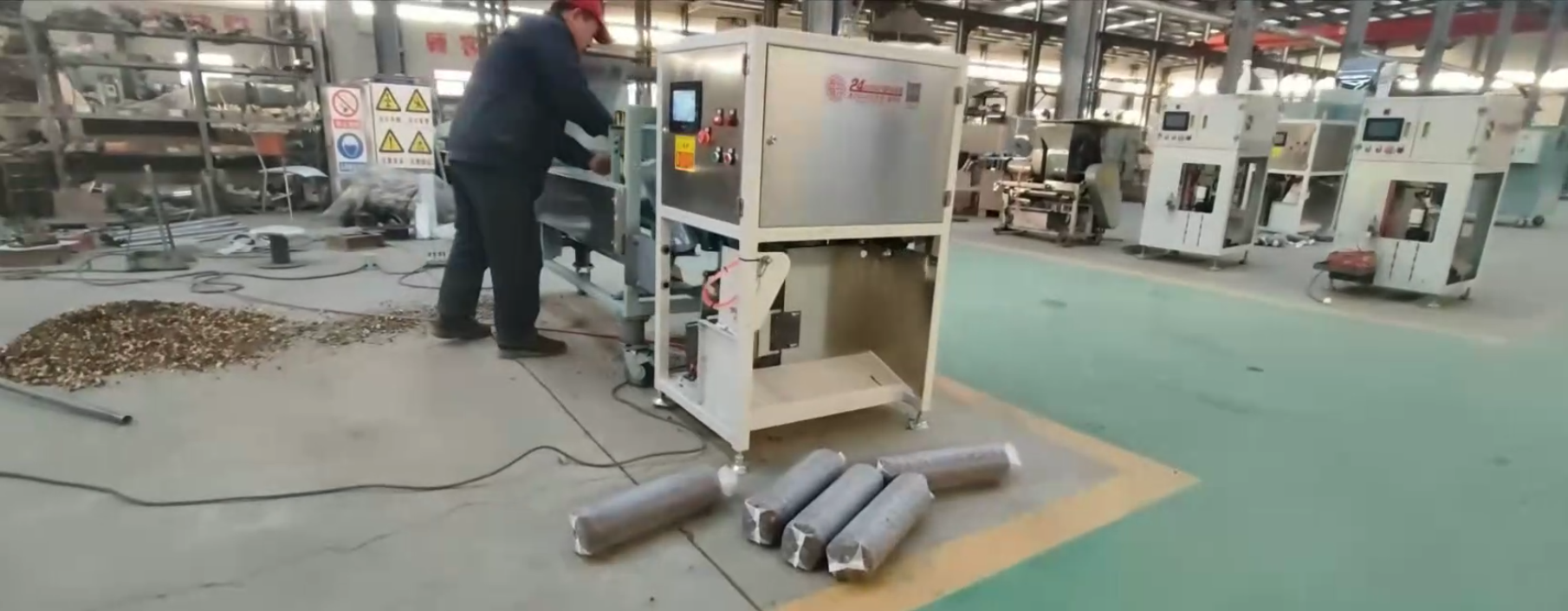
The selection problem is not a lack of machine options. It is a mismatch between the machine envelope and the production envelope. A bagging machine can look correct on a quotation sheet and still fail at the farm because the capacity is not balanced with the tying or inoculation step, the bag format sits outside the working range, or the control and material package does not fit the shift pattern and hygiene plan.
Three mismatches are common in edible mushroom automation equipment projects:
- Throughput mismatch. A 400–600 bags/h bagger may fit a semi-automatic mushroom bag filling machine role or a mid-capacity automatic mushroom production line, but it will not automatically balance a line running at a different rate. The bagger must be matched to the mushroom substrate mixer, conveyor, mushroom bag tying machine and inoculation step.
- Bag-format mismatch. A machine rated for 28–60 cm length, 12–25 cm width and ≤45 cm fill height has a defined working window. A bag outside that window is not a minor change; it affects filling, folding, tying and transfer.
- Control and hygiene mismatch. Foot-pedal operation, two-stage gear drive and friction clutch define how the operator controls the cycle. Carbon steel versus SS304 defines which surfaces can be cleaned and where food-contact documentation is needed.
A capacity figure is a configuration statement, not a promise for every bag size. Confirm the rated output at your target bag length, bag width, fill height and substrate condition.
Industry Background: Automation Is Moving from Optional to Structural
Commercial mushroom production is increasingly specified as a line rather than a collection of stand-alone benches. Bagging, mixing, sterilization, inoculation and handling equipment are now evaluated together because the bagging machine sets the rhythm for the rest of the mushroom equipment production line. That is why buyers compare an automatic mushroom bagger, a semi-automatic mushroom bagger and an integrated mushroom substrate bag filling machine against the same operating plan rather than against catalogue photographs alone.
Dataintelo's mushroom equipment market research places the 2025 global mushroom equipment market valuation at USD 3.8 billion and identifies China at 42.3% of global mushroom equipment market revenue in 2025. China's edible mushroom industry total output value was CNY 380 billion in 2024, according to verified secondary coverage citing Ministry of Agriculture data via People's Daily. These figures explain why bagging equipment is increasingly specified as part of an integrated line: the volume of substrate moving through commercial farms requires repeatable bag formation, filling and transfer.
Regulatory expectations are also shaping machine selection. For the European Union, the verified compliance frame is CE marking under the Machinery Directive and the EMC Directive. For food equipment in the United States, FDA CGMP requirements under 21 CFR Part 117 state that equipment used in manufacturing, processing, packing or holding food must be designed and maintained to be adequately cleanable and to protect against contamination. NSF/ANSI 2 sets minimum food protection and sanitation requirements for materials, design, fabrication, construction and performance of food handling and processing equipment. Even when a bagging machine is not a full food-processing line, these references are useful because they force the buyer to ask for cleanability, material and construction evidence rather than accepting a general food-grade claim.
Detailed Solution: The Six Specification Gates
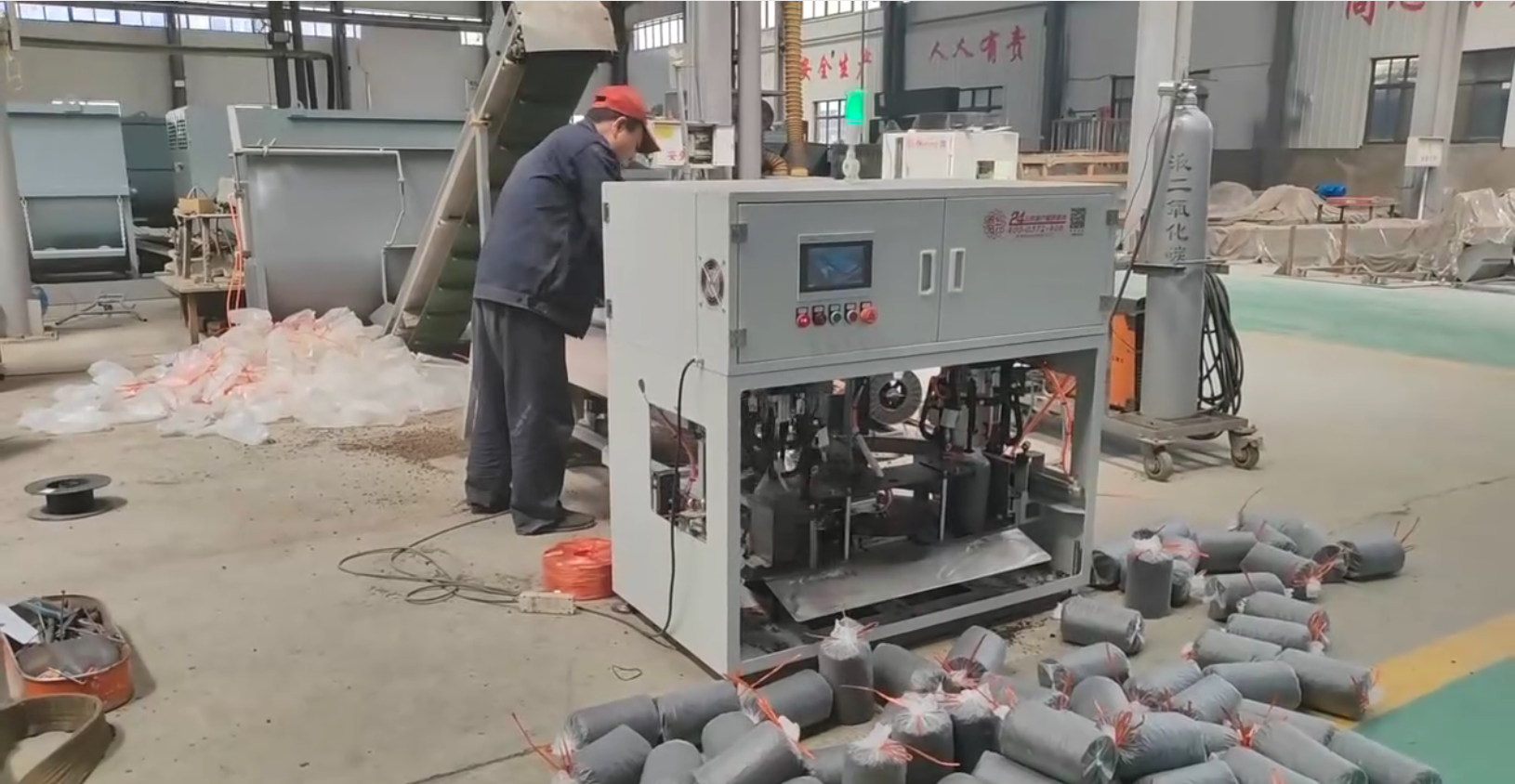
The practical answer is to specify the machine in six gates. Each gate produces a number or a document that can be checked in the quotation, factory acceptance test and sample run. The gates are capacity, bag size, power, control and drive, material, and integration.
Gate 1 — Capacity: 400–600 bags/h as a Line-Balance Input
The stated capacity range is 400–600 bags per hour. Use it as a planning band, then calculate the actual bags per hour needed at the filling station after allowing for bag change, substrate change, tying, transfer and operator breaks. A bagger that is fast enough in isolation but slower than the tying step creates a queue; a bagger that is oversized creates idle capacity. The right question is not what the highest bags/h figure is, but at what bag format and substrate the machine delivers the output the line can absorb.
For a line built around the 4-Station Shiitake Mushroom Bagging & Tying Production Line, the bagger's output must be read together with the tying stations and transfer. For a line using an Automatic Mushroom Inoculation Machine, the bagger must deliver a bag that the inoculation interface can accept. In both cases, the bagging machine is one part of a mushroom equipment production line, not a stand-alone result.
Gate 2 — Bag Size: Length 28–60 cm, Width 12–25 cm, Fill Height ≤45 cm
The verified working envelope is bag length 28–60 cm, bag width 12–25 cm and maximum filling height ≤45 cm. These three dimensions should be checked against the actual bag portfolio before a machine is selected.
- Length 28–60 cm covers the bag body length used in the target format; confirm the folded or finished length, not only the flat film length.
- Width 12–25 cm defines the bag mouth and body width that the filling sleeve and forming section can handle.
- Maximum filling height ≤45 cm is the substrate column limit; exceeding it changes fill weight, bag stability and transfer behavior.
The multi-function sleeve and auger configuration is relevant for spawn and pillow packaging. It is not a cosmetic option. It changes how substrate or spawn is introduced and how the bag is presented for closing. Buyers should ask for a sample run using the actual bag and substrate, not a generic demonstration with a different film.
Gate 3 — Power: 1.5 kW, AC220V 50Hz
The electrical package is 1.5 kW at AC220V 50Hz. Check site voltage, frequency, phase and protection before ordering. If the site supply differs, resolve the conversion or protection method with the supplier before shipment. Do not treat the motor rating as the complete electrical specification: the control circuit, foot pedal, emergency stop and safety interlock also need to match the site.
Gate 4 — Control and Drive: Foot Pedal, Two-Stage Gear Drive, Friction Clutch
The operator control is a foot pedal; the drive is a two-stage gear drive with friction clutch. The foot pedal gives the operator hands-free control of the filling cycle, which matters when the operator is guiding the bag and checking fill height. The two-stage gear drive and friction clutch define the mechanical transmission; the buyer should confirm clutch adjustment, wear parts and maintenance access.
The risk-control data for this equipment family identifies mechanical jamming and operator injury as risks, with safety guard, emergency stop, overload protection, training, safety interlock, warning labels and regular maintenance as controls. Those controls should be visible on the machine and included in the acceptance checklist.
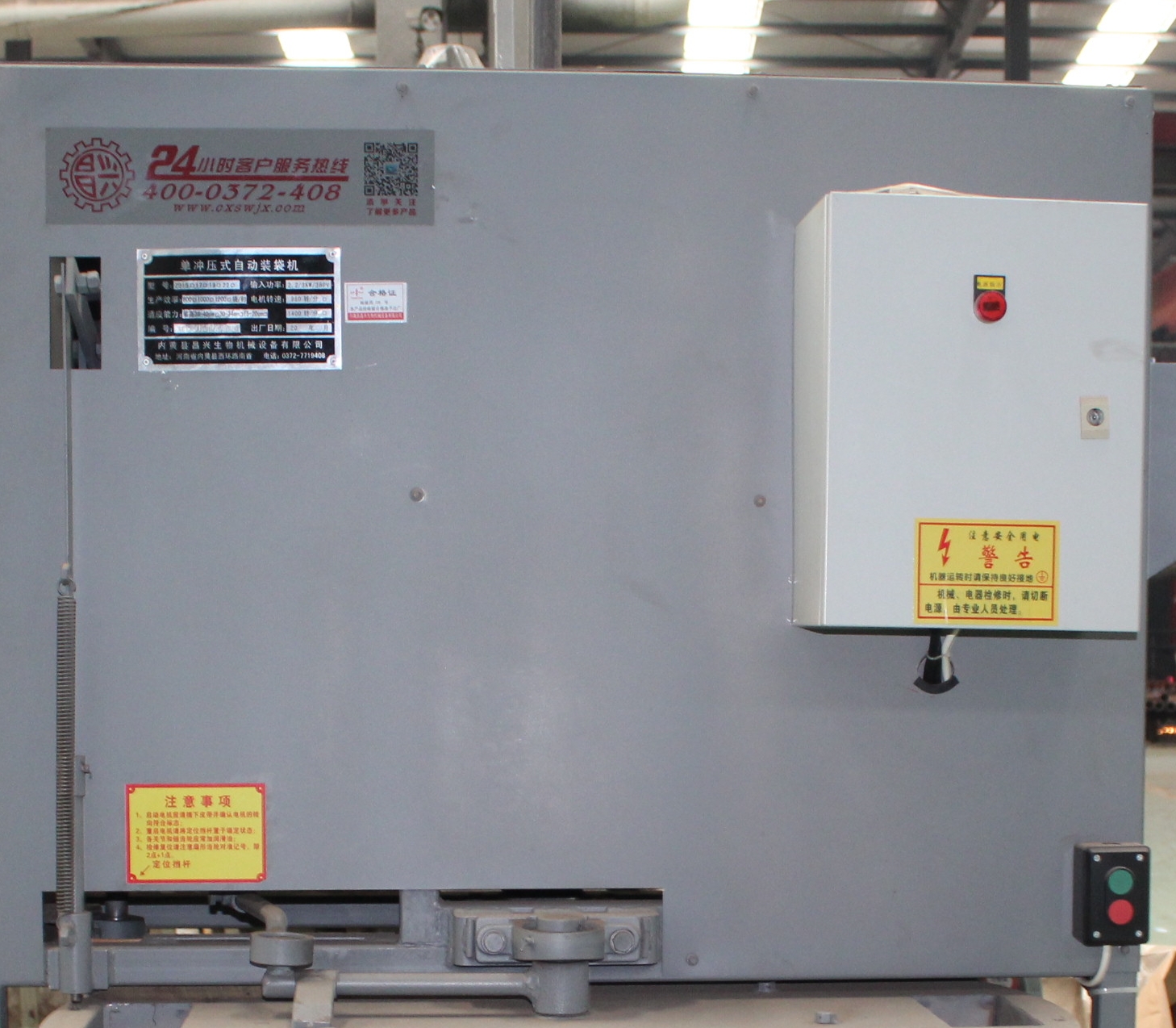
A foot pedal is not a substitute for a guard. Confirm emergency stop location, guard coverage, warning labels and overload protection before operating the machine.
Gate 5 — Material: Carbon Steel and SS304
Material choices include carbon steel and SS304. The selection should follow the surface map, not the sales label. Carbon steel is appropriate where the structure is not a food-contact or washdown surface and is protected against corrosion. SS304 is selected where the buyer needs a stainless food-contact or cleaning surface. Ask the supplier to identify which parts are carbon steel, which are SS304, which surfaces contact substrate or spawn, and how seams, corners and fasteners are cleaned.
The FDA CGMP cleanability principle and NSF/ANSI 2 scope give the buyer a neutral way to ask for material, design, fabrication and construction evidence without overclaiming that a particular machine is certified to a standard it does not hold. For EU delivery, the CE marking reference under the Machinery Directive and EMC Directive should also be checked against the exact model.
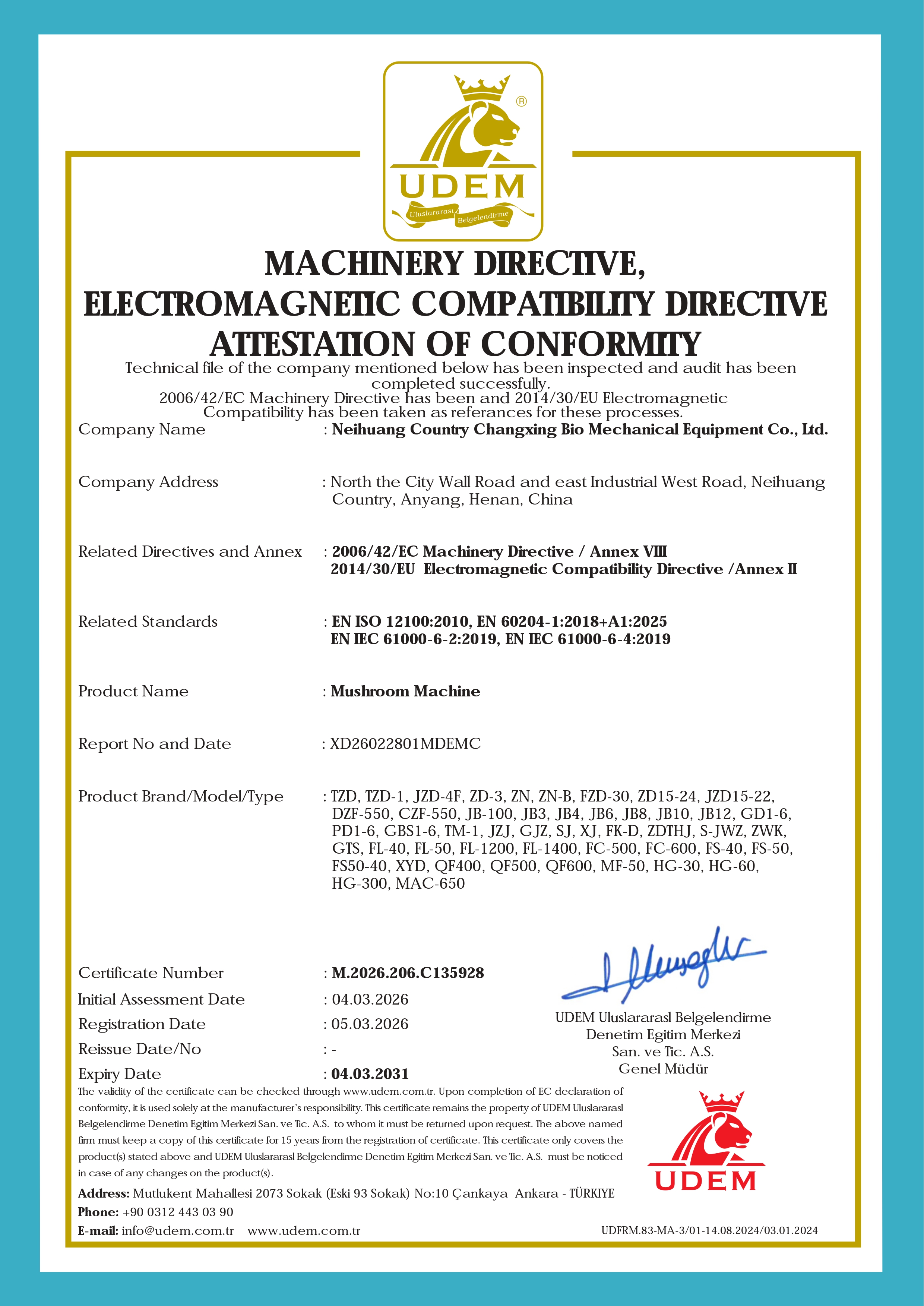
A CE certificate image in the supplier documentation is a starting point. Verify the certificate number, model coverage and applicable directives for the exact machine and destination market.
Gate 6 — Integration: Sleeve, Auger and Downstream Line
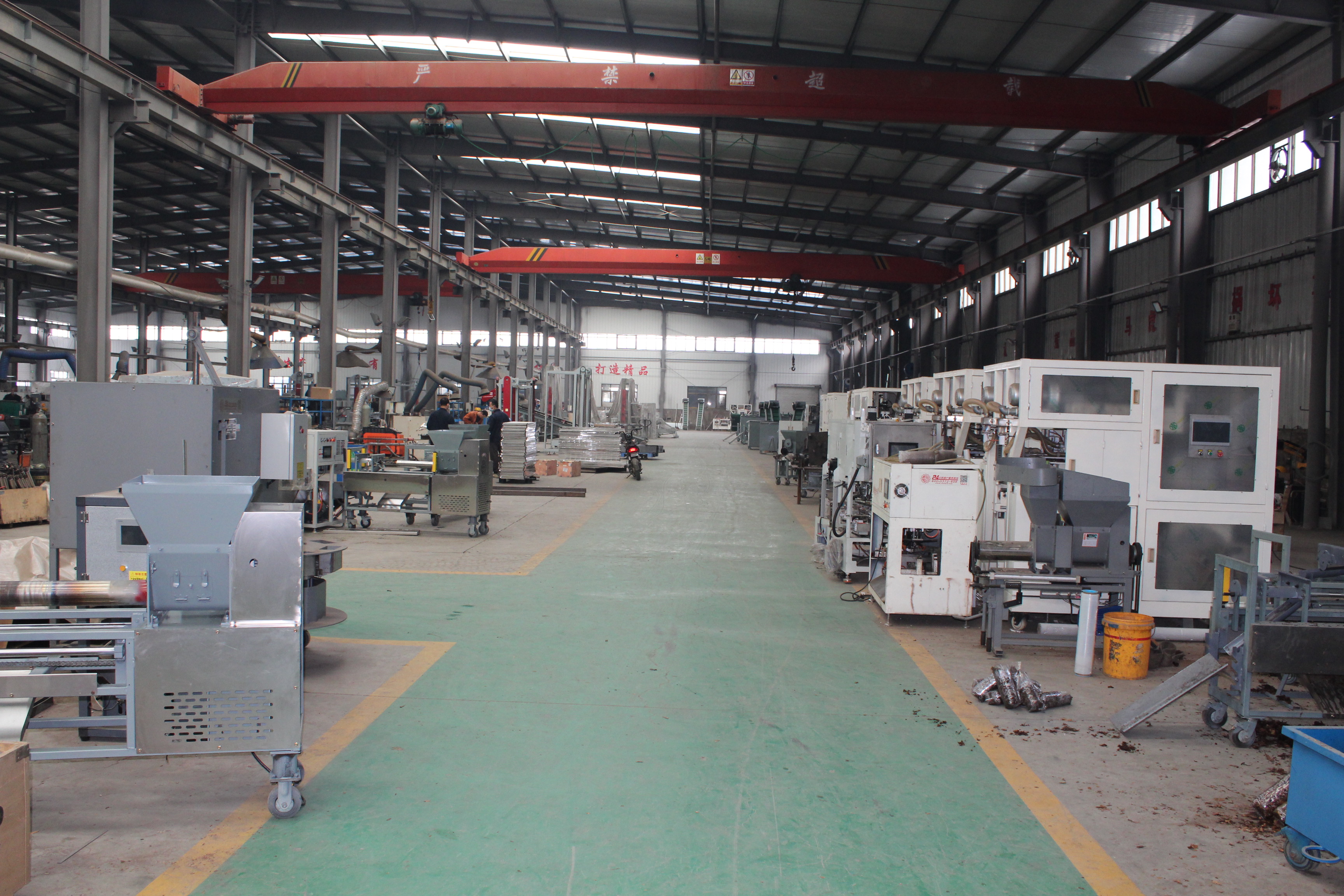
The bagging machine should be specified with the multi-function sleeve and auger configuration for spawn and pillow packaging, then matched to the downstream line. Integration checks include bag transfer height, cycle time, bag orientation, tying interface, inoculation interface, control signals, footprint and maintenance access. A bagging machine that works on a stand-alone table can fail when it is placed in a line because the transfer point, not the bagger, becomes the constraint.
In a shiitake mushroom bagging and tying line, the bagger should be specified with the tying interface, not as a stand-alone unit. In a line with an Automatic Mushroom Inoculation Machine, the bag must arrive at the inoculation point in the expected orientation and fill condition. These interface questions belong in the RFQ, not in the commissioning week.
Step-by-Step Breakdown: A Buyer's Selection Workflow
- Define the bag portfolio. List every bag length, width and target fill height. Check each against 28–60 cm, 12–25 cm and ≤45 cm. Mark any format outside the envelope as a separate project, not a changeover assumption.
- Calculate required output at the constraint. Convert the line's target bags per shift into bags per hour, then compare with 400–600 bags/h. Identify whether the bagger, tying station or inoculation step is the constraint.
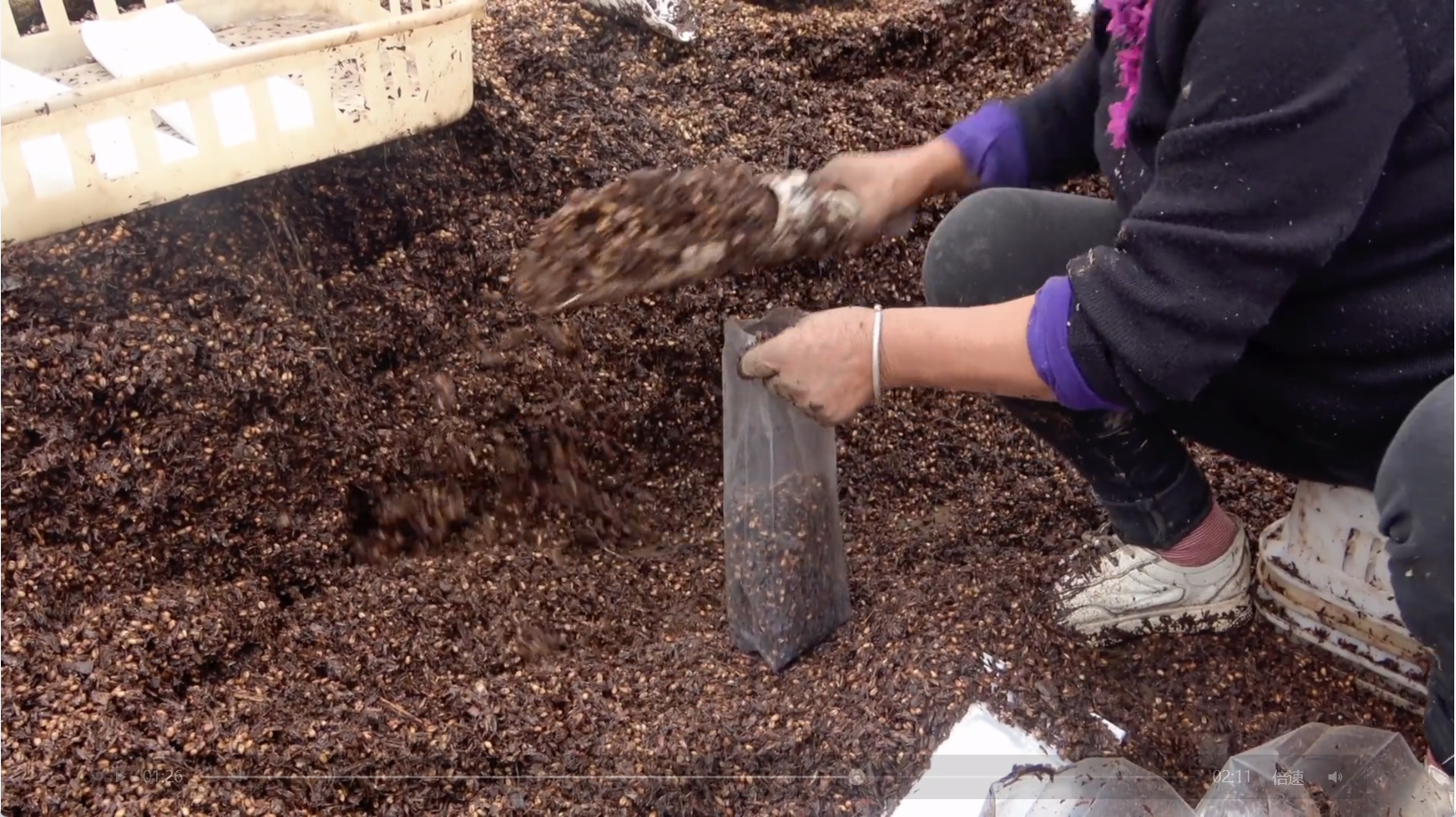
- Confirm the substrate and packaging method. State whether the machine will run spawn, compost, substrate or pillow packaging. Confirm the multi-function sleeve and auger configuration for the actual material.
- Verify the electrical site. Match 1.5 kW, AC220V 50Hz to the available supply. Confirm protection, earthing, emergency stop and control voltage with the supplier.
- Review the control and drive package. Confirm foot pedal operation, two-stage gear drive, friction clutch adjustment and access to wear parts. Add guard, emergency stop, overload protection and warning labels to the acceptance checklist.
- Map materials and hygiene. Ask for a surface map of carbon steel and SS304. Confirm food-contact areas, cleaning method and documentation required for the destination market.
- Run the sample and acceptance test. Test the actual bag, substrate and fill height. Confirm bag formation, fill weight consistency, closing, transfer and operator cycle. The verified procurement terms for this equipment family are MOQ 1 unit, FOB/CIF delivery terms, pre-shipment test acceptance and 30/70 payment terms. Record the approved sample as the acceptance reference.
Use Cases: Matching the Specification to the Farm
Oyster mushroom bagging
For an oyster mushroom bagging machine, bag width and fill height usually determine whether the bag stands and transfers correctly. Use the 12–25 cm width and ≤45 cm fill height as the first screen, then confirm the actual bag with a sample. If the farm runs multiple oyster mushroom bag sizes, the changeover procedure and footprint matter as much as the 400–600 bags/h capacity.
Shiitake mushroom bagging and tying
In a shiitake mushroom bagging machine project, the bagger should be specified with the tying interface, not as a stand-alone unit. The 4-Station Shiitake Mushroom Bagging & Tying Production Line is the relevant integration example: the bagger's output, bag orientation and transfer height must match the tying stations. Confirm that the bag length and width are within 28–60 cm and 12–25 cm before committing to the line layout.
Spawn and pillow packaging
A spawn producer or a farm packing spawn and pillow bags needs the multi-function sleeve and auger configuration. The selection question is whether the same machine can handle the spawn and pillow formats without compromising fill accuracy or bag presentation. Test both formats, and confirm the cleaning procedure between them.
Retrofit and expansion
When adding a bagger to an existing mushroom substrate mixer, industrial mushroom sterilization equipment or inoculation line, the new machine must fit the existing utility and transfer envelope. Use the six gates as an interface checklist; do not buy only on bags/h. This is especially important when the existing line includes mushroom processing equipment or handling equipment with its own cycle time.
Comparison Table: Automatic vs Manual Bagging
The comparison below uses the verified first-party comparison data for automatic bagging versus manual bagging. It is a directional comparison, not a site-specific guarantee.
| Comparison area | Verified difference: automatic bagging vs manual bagging |
|---|---|
| Output | 80% higher output |
| Labor | 50% less labor |
| Labor cost | 60% lower labor cost |
| Efficiency | Higher efficiency, lower energy cost |
| Quality | Consistent quality |
| Maintenance | Stable operation, less manual intervention |
| Best fit | Large-scale mushroom farms, automated production lines |
Source: first-party comparison content unit for automatic bagging vs manual bagging. No independent throughput, failure-rate or total-cost-of-ownership data is included in the verified data package.
FAQ
What compliance documentation should I check before accepting a mushroom bagging machine?
For EU market access, verify CE marking under the Machinery Directive and the EMC Directive for the exact model. For food-contact and cleanability questions, use FDA CGMP 21 CFR Part 117 and the scope of NSF/ANSI 2 as a documentation checklist: ask for the material map, cleanability details, certificate number and model coverage. Do not accept a certificate image without checking that it covers the machine you are buying.
Can one bagging machine handle both shiitake and oyster mushroom bag formats?
It can be evaluated within the stated working envelope: bag length 28–60 cm, bag width 12–25 cm and maximum filling height ≤45 cm, with the multi-function sleeve and auger configuration for spawn and pillow packaging. Shiitake and oyster formats still need a sample run because bag film, substrate and closing method can change the result. Confirm both formats against the same machine specification before ordering.
What cost factors should I include in the budget for a 400–600 bags/h bagging machine?
Build the budget from the machine configuration, not a single price. Include capacity, bag-size range, foot-pedal control, two-stage gear drive and friction clutch, carbon steel or SS304 material scope, multi-function sleeve and auger, and integration with the 4-Station Shiitake Mushroom Bagging & Tying Production Line or Automatic Mushroom Inoculation Machine. Add freight, installation, commissioning, spare parts and operator training. Request an itemized quotation because the verified data package does not provide a market price for this machine class.
How do I validate bag size, fill height and substrate before ordering?
Run a sample with your actual bag and substrate. Check bag length 28–60 cm, width 12–25 cm and fill height ≤45 cm; confirm the foot pedal cycle, bag formation, fill consistency and transfer to the next step. The verified procurement terms are MOQ 1 unit, FOB/CIF delivery terms, pre-shipment test acceptance and 30/70 payment terms. Keep the approved sample as the reference for the pre-shipment test.
What are the procurement terms and lead-time steps for a sample or quote?
The verified terms are MOQ 1 unit, FOB/CIF delivery terms, pre-shipment test acceptance and 30/70 payment terms. Exact production lead time should be confirmed in the quotation because it depends on the machine configuration, material scope and line integration. To start, send your bag sizes, substrate, target bags/h and site voltage to Changxing Edible Mushroom Machinery through www.automushmachinery.com, email nhchangxing@outlook.com or WhatsApp +86 13103721233, and request a sample test or itemized quote.
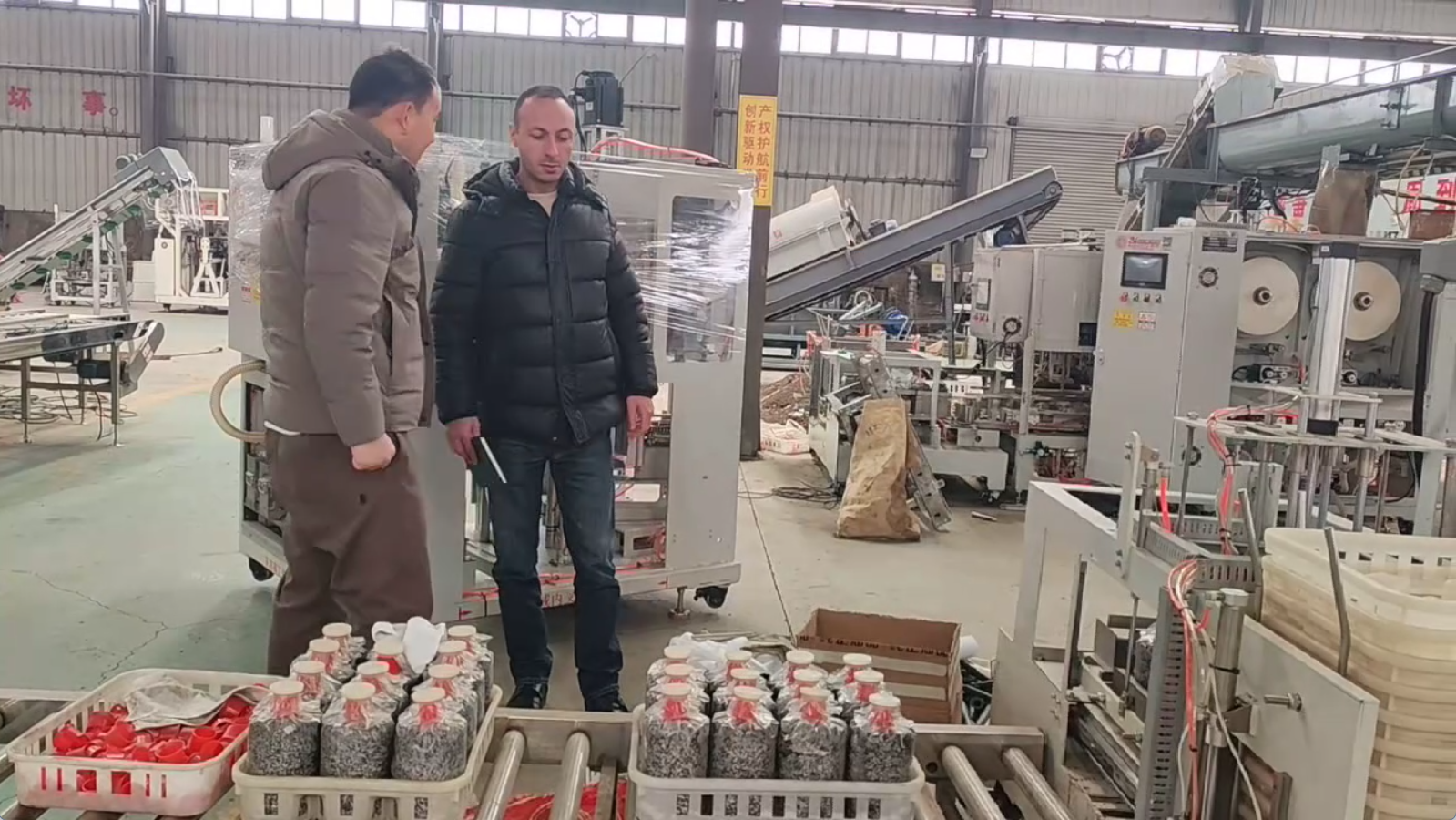
Next step: Request a sample test or itemized quote for a 400–600 bags/h edible mushroom bagging machine. Send your bag length, bag width, fill height, substrate, target output and site voltage to Changxing Edible Mushroom Machinery. Website: www.automushmachinery.com | Email: nhchangxing@outlook.com | WhatsApp: +86 13103721233.
Conclusion
The selection rule for an edible mushroom bagging machine is to match the machine envelope to the production envelope before discussing options. Check the 400–600 bags/h capacity against the line constraint, the 28–60 cm bag length and 12–25 cm bag width against the actual bag portfolio, the ≤45 cm fill height against substrate behavior, and the 1.5 kW AC220V 50Hz package against the site supply. Then confirm the foot pedal, two-stage gear drive and friction clutch, the carbon steel or SS304 surface map, and the multi-function sleeve and auger configuration for spawn and pillow packaging.
Changxing Edible Mushroom Machinery was founded in 2009, operates a 20,000 m² factory with 130 employees and a 25-engineer R&D team, and reports annual output of 10,000 units and a 60% export ratio. That supplier context matters at execution stage: spare parts, training, documentation and line support should be checked as part of the long-term relationship, not after the machine arrives. Use the six gates in the RFQ, run the sample, and record the approved bag as the acceptance reference.
Have Questions or Need More Details?
Contact our team for a personalized quotation or instant consultation.
Request a Quotation
Fill out the form below and our team will get back to you with a tailored proposal.
WhatsApp Direct Chat
Prefer to chat in real-time? Message us on WhatsApp for instant assistance & quick answers.
- Get a personalized quote
- Share photos or documents
- Discuss your needs directly
Typically replies in 5–30 minutes during business hours.