Edible Mushroom Automation Equipment Explained: Core Machines and How They Work Together
An edible mushroom automation line is a sequence of stages, not a shopping list of machines. Substrate preparation, bagging, sterilization, inoculation and handling each solve a different problem, and the value of edible mushroom automation equipment comes from how one stage hands material to the next without waiting.
For new cultivators and small-scale farms, that changes the first question. Instead of asking which single machine is best, it is more useful to ask which stage limits production today, what the machines in that stage actually do, and what has to be true before the next stage can be automated. This explainer answers that using the machine types built by Changxing Edible Mushroom Machinery — legally Neihuang County Changxing Biological Machinery Equipment Co., Ltd., a Henan-based manufacturer of edible mushroom machinery and equipment founded in 2009 — together with the specifications that matter in daily operation, including a bagging and tying stage rated at 400–600 bags per hour on AC380V 50Hz power.
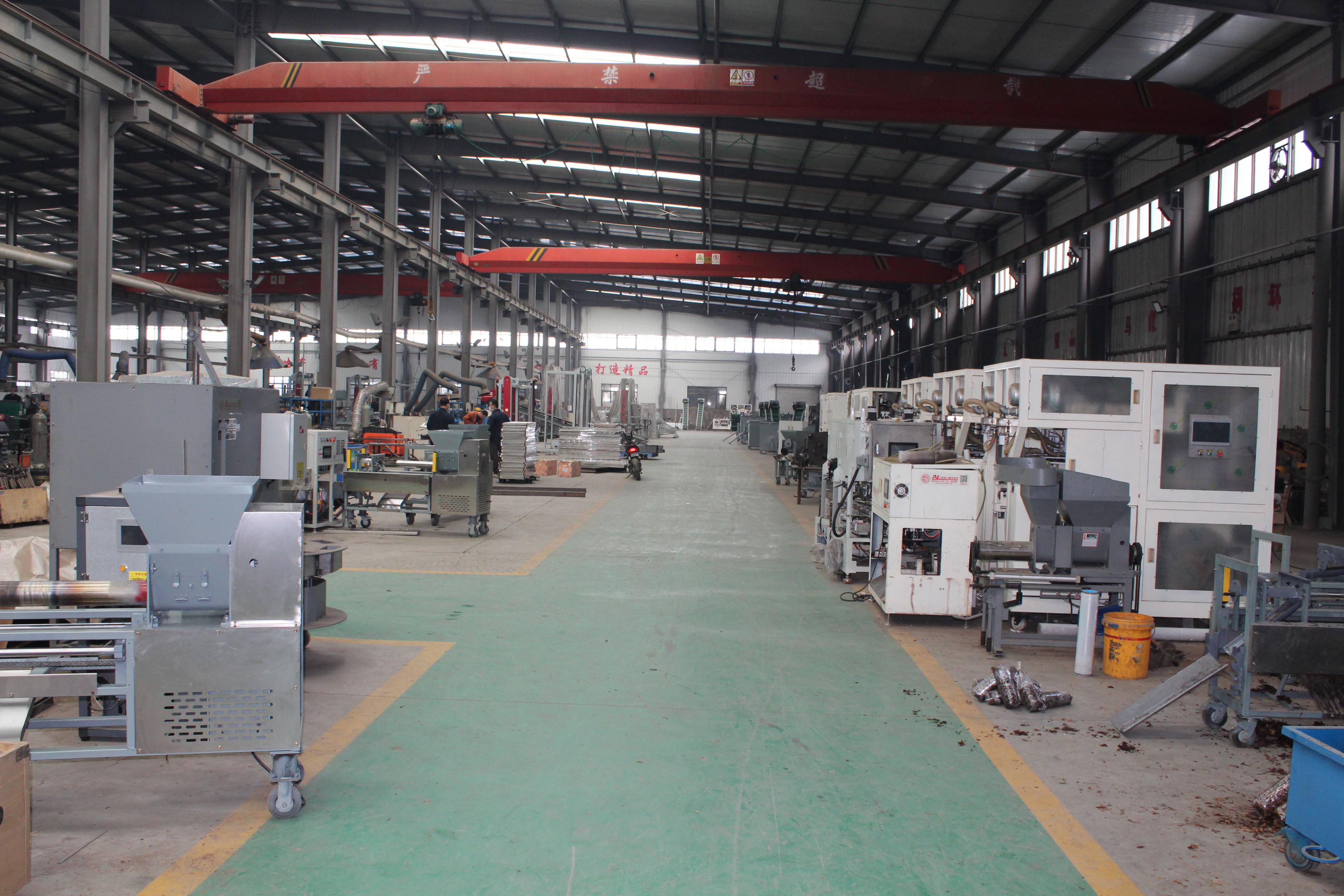
Why the Bagging Bench Is Usually the First Bottleneck
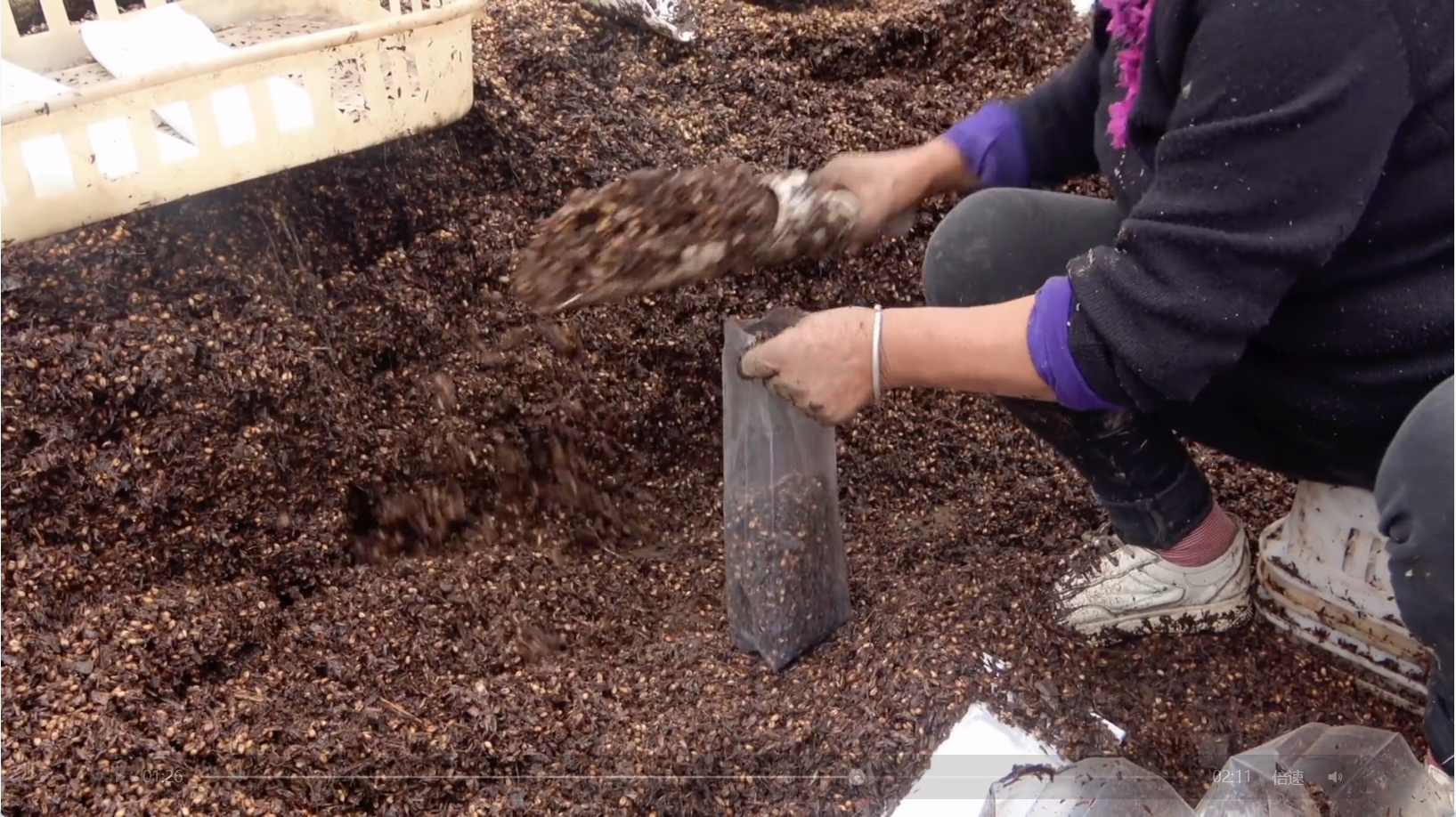
On most small and mid-sized farms the constraint is not the growing room — it is the bench where substrate is filled into bags and closed. Manual bagging is a hand-sequenced job: fill, judge the weight, compress, tie, stack. Every step depends on the person doing it, and cycle time is set by the crew rather than by the process.
The second problem is consistency. Fill weight and tying tightness vary between operators and across a shift, and that variation travels downstream: unevenly filled bags behave differently in the sterilizer, and loosely tied bags are harder to handle and rack. Consistency is one of the documented differences between automated and manual bagging — the comparison reference for automated bagging against manual bagging records higher efficiency, consistent quality, roughly 80% higher output, 50% less labour and 60% lower labour cost, together with stable operation that needs less manual intervention.
Automation is not automatically the right first step for every farm, however. A machine line needs a stable three-phase supply — which is why the bagging and tying stage described here runs on AC380V 50Hz — plus floor space, a trained operator and a maintenance routine. Below a certain daily volume, a semi-automatic mushroom bag filling machine paired with a mushroom bag tying machine is often the more sensible entry point, with the full mushroom equipment production line added once volume justifies it.
What Is Driving Mushroom Equipment Demand in 2026
Demand for edible mushroom machinery and equipment reflects the industrialisation of mushroom growing itself. Dataintelo values the global mushroom equipment market at USD 3.8 billion in 2025, projected to reach USD 7.2 billion by 2033, with Asia-Pacific holding a 42.3% revenue share in 2025, driven largely by industrial-scale cultivation in China.
The upstream supply base is correspondingly large. China's edible mushroom industry value exceeded RMB 380 billion (approximately USD 53 billion) in 2024, representing more than 70% of global output, according to figures reported by People's Daily and China's Ministry of Agriculture. Market estimates should be read with care, though: a machinery-only definition of the category, such as the USD 1.23 billion figure published by QYResearch, produces a materially smaller market than a broader equipment definition.
Changxing Edible Mushroom Machinery operates inside that supply base. The company was founded in 2009, runs a 20,000 m² facility with 130 employees and a 25-engineer R&D team, reports an annual output of 10,000 units, and exports roughly 60% of production to markets including South Korea, Malaysia, Central Asia, Europe and Russia.
Core Machines Explained, Stage by Stage
A complete line is easier to understand as five working stages. Each stage has a defined input, a defined output, and a machine or group of machines performing the conversion.
Stage 1 — Substrate Preparation: Crushing, Screening and Mixing
The Large-Scale Corn Cob Crusher performs the first conversion, reducing corn cobs and comparable raw materials to a usable particle size. Particle size matters more than it first appears: substrate that is crushed unevenly packs unevenly, which changes how bags fill and how heat moves through them during sterilization.
Screening and mixing follow. The large-scale raw material screening machine removes oversized material and fines, and the large-scale mixer — used as a mushroom substrate mixer — blends base material with supplements and water. When mixing is uneven, the bagging stage inherits the problem and has to compensate, so crusher, screen and mixer settings form the first quality control point in the line rather than simple preparation equipment.
Stage 2 — Bagging and Tying: Where the Line Sets Its Pace
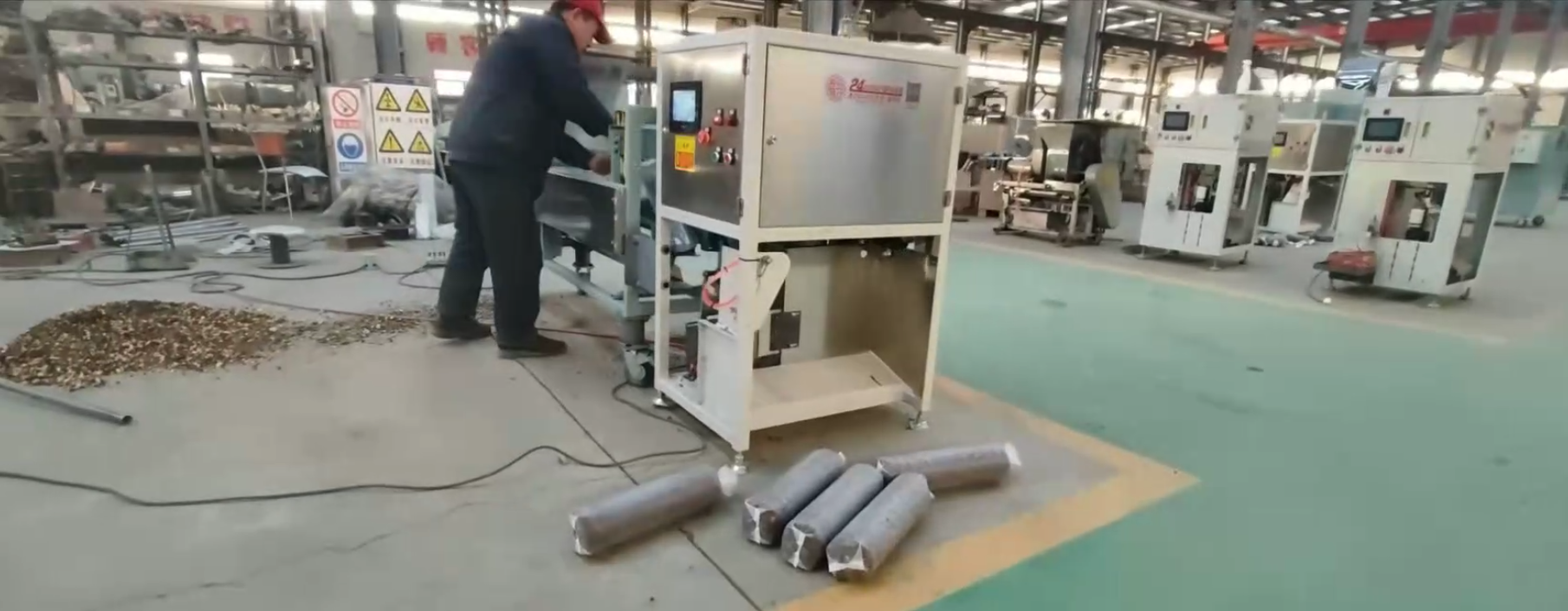
Bagging determines daily output. The Integrated Bagging & Tying Machine — also supplied as an intelligent bagging and tying machine — fills substrate into the bag and closes it in one pass, removing the separate hand-tying operation. Its rated capacity is 400–600 bags per hour, and it runs on AC380V 50Hz power.
Bag dimensions are configured around the grower's own specification rather than one fixed size, so the same equipment platform covers mushroom spawn bag making, mushroom substrate bag filling and mushroom compost bagging applications, including the oyster mushroom bagging machine and shiitake bagging machine configurations used in those crops.
The operating interface is deliberately simple. Changxing designed its intelligent bagging machine with an easy-to-understand interface so that a grower needs only simple training to get started, which reduces dependence on a specialist operator. Parameter control is not generic either: bag tightness, sealing depth and bag shape are adjusted for different varieties, and pressure control and mold shape were optimised so that one platform can serve shiitake, oyster mushroom, black fungus, enoki, pleurotus eryngii, pleurotus geesteranus, white fungus, seafood mushroom and agrocybe aegerita production.
One caution when comparing suppliers: 400–600 bags per hour is a machine rating. Real output includes bag changes, substrate interruptions and rework, so the figure to plan with is the sustained hourly rate across a full shift.
Stage 3 — Sterilization: The Handover Between Bagging and Inoculation
Filled bags cannot be inoculated directly; they pass through sterilization first. Industrial mushroom sterilization equipment — atmospheric sterilization cabinets in the Changxing range — heat-treats the bags so competing organisms are removed before spawn is introduced.
This is where an upstream weakness becomes expensive. Bags must hold shape and integrity through the heat cycle, and loosely tied or unevenly filled bags create handling problems going in and contamination risk coming out. Loading density in the cabinet is a second variable: packed too tightly, air movement drops; packed too loosely, the cycle is wasted.
Stage 4 — Inoculation: The Biological Step
Inoculation determines how evenly the substrate is colonised. The Automatic Mushroom Inoculation Machine delivers a controlled spawn dose to each bag; the same manufacturer also builds fully automatic high-speed shiitake mushroom inoculation machines and fully automatic loop liquid inoculation machines, plus automatic punching machines that open the inoculation channel.
Because the dose is set by the machine rather than by hand, variation at this stage is much smaller than with manual inoculation. The practical benefit for a new grower is predictability: a more uniform spawn dose supports a more uniform colonization window, which makes growing-room scheduling easier.
Stage 5 — Handling, Racking and Cultivation Support
Once bagging and inoculation are automated, handling becomes the next bottleneck. This stage covers automatic racking machines, fully automatic basket turning machines, fully automatic loop pressing and covering basket machines, fully automatic bagging and plugging basket machines, mushroom bag separators for recycling bags and substrate, intelligent dryers, mushroom growing room equipment, and the smart remote control layer that connects the production line.
For a small farm this stage can be phased in later. The logic is the same as everywhere else in the line: automate the step that consumes the most labour hours per bag, and keep the rest manual until volume justifies the change.
| Stage | Representative machine | Primary job |
|---|---|---|
| Substrate preparation | Large-Scale Corn Cob Crusher | Reduces corn cobs and similar raw materials to a consistent particle size |
| Substrate preparation | Large-Scale Raw Material Screening Machine, large-scale mixer | Removes oversize material and blends base material with supplements and water |
| Bagging and tying | Integrated Bagging & Tying Machine (intelligent bagging and tying machine) | Fills and ties each bag in one pass; rated 400–600 bags/h on AC380V 50Hz |
| Sterilization | Atmospheric sterilization cabinets | Heat-treats filled bags before inoculation |
| Inoculation | Automatic Mushroom Inoculation Machine | Delivers a consistent spawn dose to each bag |
| Handling | Automatic racking machines, basket turning machines, mushroom bag separators | Moves bags through the growing room and recycles bags and substrate |
Step by Step: How One Production Cycle Runs
Seen as a single cycle, the line runs as follows.
- Raw material is fed to the Large-Scale Corn Cob Crusher for size reduction.
- Crushed material is screened on the large-scale raw material screening machine.
- Screened material is blended with supplements and water in the large-scale mixer until the batch is uniform.
- Mixed substrate moves to the bagging stage, where the Integrated Bagging & Tying Machine fills and closes each bag at a rated 400–600 bags per hour on AC380V 50Hz power.
- Filled bags are loaded into atmospheric sterilization cabinets and sterilised.
- Cooled bags pass to the Automatic Mushroom Inoculation Machine, which introduces a controlled spawn dose.
- Inoculated bags are moved into the growing room and racked using automatic racking machines, with basket turning and bag separation supporting the cycle afterwards.
- Environmental control and the smart remote control layer hold the growing stage stable while the next bagging cycle begins.
Line capacity is not the sum of the machine ratings. Third-party buyer guidance published by HTNXT reports that a 2-station full-automatic mushroom substrate bagging production line can reach 15,000 bags per day, which shows how strongly the figure depends on station count and configuration rather than on any single machine.
A practical planning rule for small farms is to size the line around the bagging stage and confirm that every other stage can keep up with it: substrate preparation ahead of it, sterilization and inoculation behind it, handling equipment sized to the same rhythm.
Which Setup Fits Which Farm: Use Cases
New oyster mushroom grower. The sensible first purchase is a single bagging and tying stage. An oyster mushroom bagging machine configuration plus a mushroom bag tying function covers the highest-labour task first, and the simple operation interface means a small family team can run it after basic training.
Shiitake producer moving to factory cultivation. This setup pairs high-speed shiitake mushroom bagging machines with fully automatic high-speed shiitake inoculation machines and bagging and plugging basket machines, so that bag preparation and basket loading follow the same rhythm instead of running as separate manual jobs.
Cooperative working with several varieties. Here the parameters that change between crops — bag tightness, sealing depth and bag shape — matter more than raw throughput. Changxing builds customised equipment sets covering spawn cultivation through to harvest, based on a cooperative's scale, varieties and production process.
Farm that already owns bagging equipment. Adding handling machines — automatic racking, basket turning and a mushroom bag separator — usually reduces labour without changing the cultivation method, which makes it the lowest-risk stage to automate second.
Manual vs Automated Bagging: A Direct Comparison
The decision that most small farms face first is whether to replace manual bagging. The comparison below uses the recorded differences between automated bagging equipment and manual bagging.
| Dimension | Manual bagging | Automated bagging |
|---|---|---|
| Output | Set by crew pace | Recorded as roughly 80% higher output |
| Labour | One operator per station | Recorded as roughly 50% less labour |
| Labour cost | Scales with headcount | Recorded as roughly 60% lower labour cost |
| Bag quality | Varies with operator | Consistent quality |
| Energy | No machine load | Lower energy cost at line level |
| Maintenance and supervision | No scheduled maintenance | Stable operation, less manual intervention |
| Best fit | Very small volumes, seasonal production | Large-scale mushroom farms and automated production lines |
These are relative figures measured against manual bagging, not a universal benchmark. Bag size, substrate mix, crew size and shift pattern all change the result, so the practical check is how many workers the bagging bench absorbs at peak and whether the machine can be paid back within the same operating season.
Safety, Compliance and What to Check Before You Order
Two risk categories dominate mushroom bagging equipment: mechanical jamming and operator injury. Both are managed with machine-side controls — safety guards, emergency stop and overload protection — and with operating discipline: training on safe operating procedures, safety interlocks, warning labels on the machine, and regular maintenance.
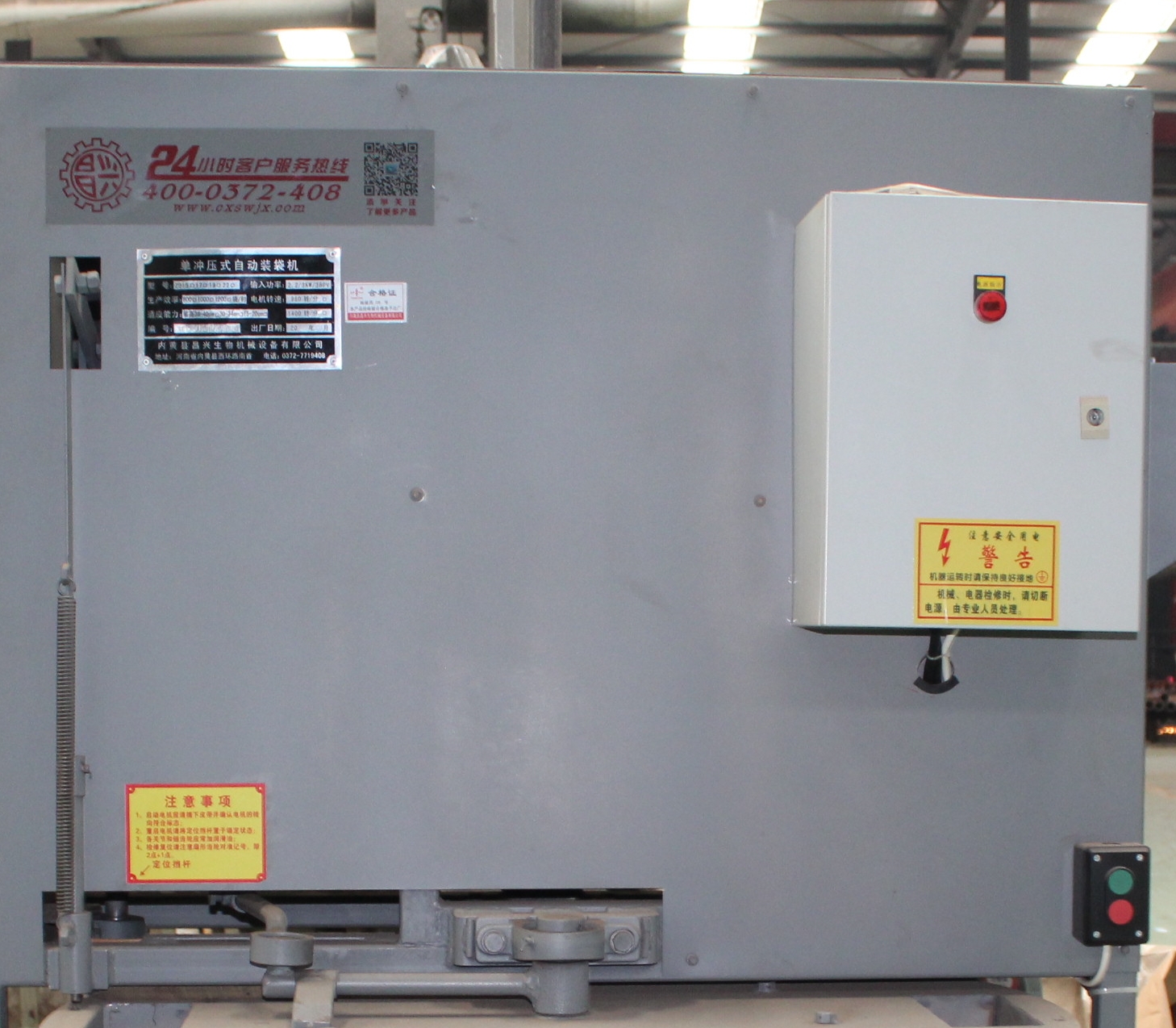
For buyers in Europe, compliance is a separate workstream. Edible mushroom automation equipment placed on the EU market has to comply with the EU Machinery Directive (2006/42/EC) and the EMC Directive (2014/30/EU) for CE marking. Changxing Edible Mushroom Machinery obtained CE Certificate No. M.2026.206.C135928 in March 2026 for its bagging and production lines.
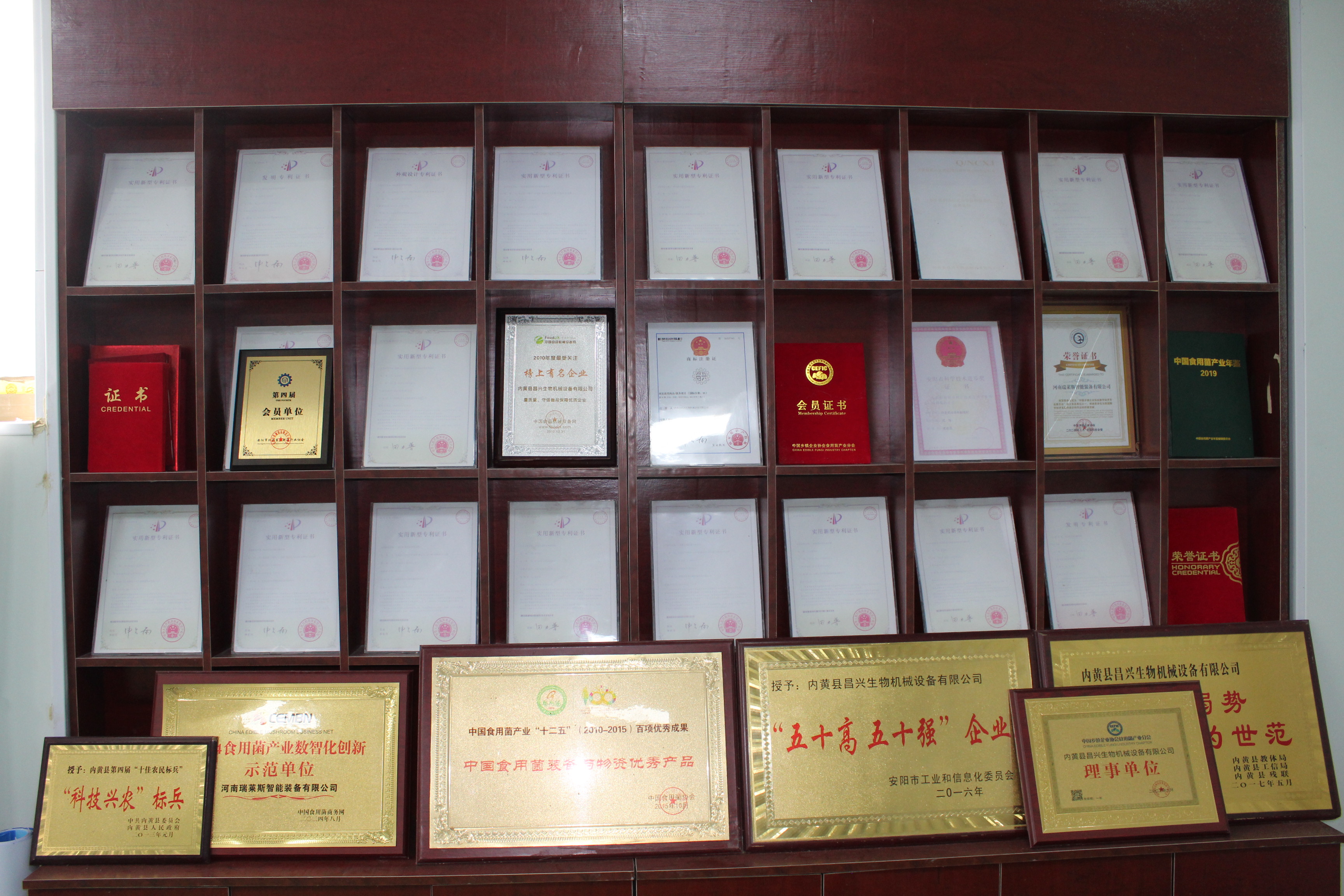
Verify three things before signing: that the certificate number covers the exact model being shipped, that the safety devices described in the manual are physically present on the delivered machine, and that operator training is included in the scope of supply rather than treated as an extra.
Frequently Asked Questions
Do edible mushroom automation machines need CE marking for Europe?
Equipment placed on the EU market normally requires CE marking, and the applicable rules include the Machinery Directive 2006/42/EC and the EMC Directive 2014/30/EU. Changxing Edible Mushroom Machinery obtained CE Certificate No. M.2026.206.C135928 in March 2026 for its bagging and production lines. Buyers ordering from outside the EU should ask for the certificate number and confirm that it covers the specific model being shipped, not only the product family.
Can one machine handle different mushroom varieties and bag sizes?
The bagging and tying stage is configured around the grower's own bag dimensions and variety. Parameters such as bag tightness, sealing depth and bag shape are adjusted per variety, and pressure control and mold shape are optimised on the test bench. The same equipment platform serves shiitake, oyster mushroom, black fungus, enoki, pleurotus eryngii, pleurotus geesteranus, white fungus, seafood mushroom and agrocybe aegerita cultivation. Capacity is a rated figure — typically 400–600 bags per hour for the bagging and tying stage on AC380V 50Hz power — so the practical answer depends on bag size and substrate.
How does automated bagging compare with manual bagging on cost and labour?
The comparison reference for automated bagging against manual bagging records roughly 80% higher output, 50% less labour and 60% lower labour cost, with consistent bag quality and stable operation that needs less manual intervention. These are relative figures measured against manual bagging rather than a universal benchmark: bag size, substrate mix, crew size and shift pattern all change the result. For a small farm, the practical check is how many workers the bagging bench absorbs at peak, and whether the machine can be paid back within the same operating season.
How can a new grower validate the equipment before ordering a full line?
Start with your own numbers rather than a catalogue. Send the supplier your bag dimensions, the variety you grow and your target bags per day, then ask for a machine configuration, a written quotation and a training outline that reflect those inputs. Changxing exports to many countries and supports customization inquiries from overseas buyers, and its intelligent bagging machine is designed with a simple, easy-to-understand operation interface so operators need only simple training to get started — which matters when a small team has to run the line through peak season.
What determines delivery and installation timing?
Timing depends on whether the order is a standard machine or a customised line, and on how many stages are automated at once. Production planning is supported by a 20,000 m² facility, 130 employees including a 25-engineer R&D team, and an annual output of 10,000 units. Buyers should ask for a written schedule separating production, shipping, installation and operator training, and confirm which spare parts are included. For a quotation, delivery estimate and machine configuration, contact Changxing Edible Mushroom Machinery at nhchangxing@outlook.com or on WhatsApp at +86 13103721233.
Conclusion: Where to Start
Edible mushroom automation equipment is best bought as a sequence rather than as a single purchase. Substrate preparation, bagging and tying, sterilization, inoculation and handling each have a machine performing a defined conversion, and the line only performs as well as the stage with the least capacity.
For a new cultivator or a small farm, the practical starting point is usually the bagging bench: a bagging and tying stage rated at 400–600 bags per hour on AC380V 50Hz power removes the largest block of manual labour and makes the downstream stages predictable. Handling and racking equipment can follow as volume grows.
Changxing Edible Mushroom Machinery builds these stages as individual machines and as complete mushroom equipment production lines, and supports customization inquiries from overseas buyers. To discuss a configuration for your bag size, variety and daily target, contact the team at nhchangxing@outlook.com, by WhatsApp on +86 13103721233, or through www.automushmachinery.com. Written quotations, machine specifications and training outlines are available on request; the factory is located in Henan Neihuang, China.
Have Questions or Need More Details?
Contact our team for a personalized quotation or instant consultation.
Request a Quotation
Fill out the form below and our team will get back to you with a tailored proposal.
WhatsApp Direct Chat
Prefer to chat in real-time? Message us on WhatsApp for instant assistance & quick answers.
- Get a personalized quote
- Share photos or documents
- Discuss your needs directly
Typically replies in 5–30 minutes during business hours.