Edible Mushroom Automation Partnership FAQ: Acceptance & Service
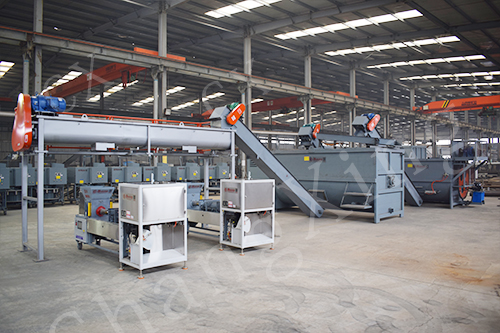
Automatic edible mushroom bagging and sealing line — the configuration most often written into long-term supply agreements.
Short answer: in an edible mushroom automation partnership, acceptance is decided by what you can verify before the machine leaves the factory — electrical configuration, rated capacity, supported bag size and construction material — while long-term support is decided by what the supplier can still do in year three. Most commercial growers already know how to compare a capacity number. Far fewer know what to ask about acceptance criteria, configuration alignment and after-sales communication across the equipment lifecycle.
This reference answers those questions directly, using documented Changxing specifications as concrete reference points: AC 380V 50Hz power input, 400–600 bags/h and higher capacity classes, supported bag size ranges, and Carbon Steel / SS304 construction. It is written for importers, distributors and commercial growers who are past first contact and are now evaluating whether a supplier is worth signing with for the long term.
The Three Questions Behind Every Equipment Partnership
Buyers evaluating edible mushroom automation equipment rarely fail because the machine is bad. They fail because nobody wrote down what "accepted" means, which bag size the line actually handles, or who answers the phone in month eighteen.
Three decision questions sit underneath almost every purchasing conversation:
- Acceptance: How do I verify that the unit delivered is the unit specified — same voltage, same rated capacity, same bag size range, same construction material?
- Configuration alignment: Will bagging, tying and inoculation equipment actually match my substrate, my bag and my daily output instead of roughly resembling it?
- Lifecycle support: What communication exists after commissioning, when a grower is running continuous shifts and cannot wait days for an answer?
An edible mushroom automation production line is not a catalog purchase. It is a workshop-layout decision, a power-supply decision and a staff-training decision at the same time. The partnership questions below are the ones that keep showing up in evaluation meetings.
Why Compliance and Service Terms Now Carry More Weight Than Price Alone
The commercial context explains why these questions became standard. Dataintelo values the global mushroom equipment market at USD 3.8 billion in 2025 and projects it to reach USD 7.2 billion by 2033, with Asia-Pacific holding a 42.3% revenue share in 2025, driven largely by industrial-scale cultivation in China. Scope matters when reading such figures: QYResearch, for example, estimates the machinery-only segment far lower, at roughly USD 1.23 billion — a reminder that market numbers are only useful once you define what is being counted.
The buyer-side driver is clearer. China's edible mushroom industry value exceeded 380 billion yuan (approximately USD 53 billion) in 2024 and represents over 70% of global output, according to People's Daily / Ministry of Agriculture reporting. Industrial-scale cultivation at that level means equipment decisions are made for multi-year production cycles, not single seasons.
Compliance reinforces the same logic. Edible mushroom automation equipment intended for the European market must comply with the EU Machinery Directive (2006/42/EC) and the EMC Directive (2014/30/EU) for CE marking. Once certification, power configuration and capacity are written into a purchase agreement, service and documentation stop being soft topics and become the parts of the contract most likely to be tested.
How a Partnership Is Structured Around Acceptance, Alignment and Support
Acceptance criteria that can be checked against a document
Acceptance works best when every check maps to a written value. For Changxing edible mushroom automation equipment, the verifiable points fall into five groups:
- Power configuration. Production-line modules and larger single machines run on AC 380V 50Hz — including the 2-Station Production Line, the 4-Station Production Lines, the ZN-B integrated bagging and tying machine and the ZD15-24 stamping bagging machine. Compact machines such as the ZD-3 small friction clutch bagging machine operate on AC 220V 50Hz, and the TZD pneumatic bagging machine is available in AC 220V / 380V 50Hz. Confirming the voltage before the order is the fastest way to avoid a site-side surprise.
- Rated capacity. Capacities span a wide band by design: 400–600 bags/h for the ZD-3, 700–900 bags/h for the TZD pneumatic bagging machine, 1,200–1,500 bags/h for the ZD15-24 stamping bagging machine, 7,000–8,000 bags/h for the ZN-B integrated bagging and tying machine, and 15,000 / 25,000 / 50,000 bags per day for the 2-Station and 4-Station production lines depending on configuration.
- Supported bag size. The production lines cover bag length 14–22cm with width 28–63cm; the 4-Station black Termitomyces line covers length 14–22cm with width 28–37cm; the ZD15-24 handles flat width 15–22cm with maximum filling height ≤19cm; the ZD-3 covers bag length 28–60cm and width 12–25cm.
- Construction material. Carbon Steel and SS304 are the standard construction specifications across the bagging, tying and basket-handling range, with SS304 used for product-contact components where specified.
- Control and motion components. Higher-tier equipment such as the CX-ZDTHJ ring-sleeving, capping and basket-loading machine uses Xinje motion-axis PLC control, Xinje servo motors, HIWIN linear guides, TBI ball screws, SMC cylinders and SICK photoelectric sensors — components that can be confirmed against the order specification rather than taken on trust.
Testing sits behind those values: Changxing applies 100% test before delivery under ISO-standard quality control. For a buyer, this is the practical definition of acceptance — a named voltage, a named capacity, a named bag size window and a named material, all present before the unit is packed.
Aligning bagging, tying and inoculation equipment with a project
Configuration alignment is where most projects are won or lost, because a bagging line that is 10% outside the bag size window is not 90% useful — it is unusable.
Daily output is the first filter. A 2-Station Production Line is specified at 15,000 bags per day; a 4-Station Production Line at 25,000 bags per day; the 4-Station line configured for black Termitomyces at 50,000 bags per day. Where a grower already has mixing capacity and needs a high-throughput single unit, the ZN-B integrated bagging and tying machine is specified at 7,000–8,000 bags/h with customizable bagging manipulator options.
Bag dimensions are the second filter, and they must be matched, not approximated. The production lines accept bag length 14–22cm and width 28–63cm; the black Termitomyces configuration narrows to width 28–37cm. Stamping-type machines work to different geometries — flat width 15–22cm with maximum filling height ≤19cm on the ZD15-24, and bag length 28–60cm with width 12–25cm on the ZD-3 and TZD units.
Inoculation is the third filter, and it is often specified later than it should be. The CJZQ-1 automatic inoculation machine is rated at 1,240 bags/h on AC 220V 50Hz, accepts flat width 14–22cm and length 40–60cm bags, and combines a 100-class FFU laminar flow hood with UV and ozone double disinfection. Where throughput demand is higher, the CX-JZJ dual-station PLC-controlled inoculation machine is rated at 2,500–2,800 bags/h on AC 380V 50Hz, with alcohol wiping, UV disinfection and FFU 100-class laminar flow protection.
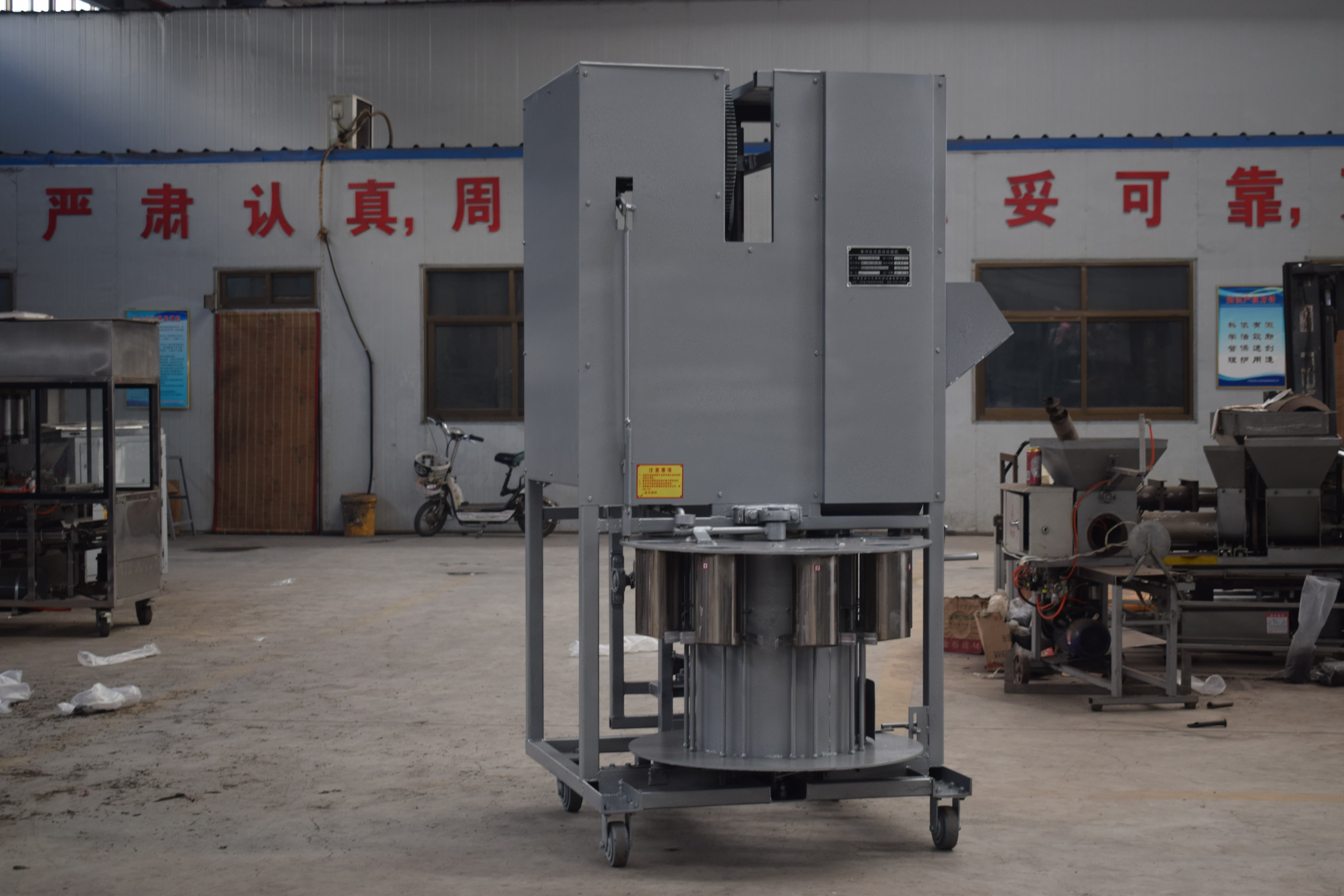
Stamping bagging machines are matched to bag geometry and filling height, not to a generic "mushroom bag" specification.
Where standard ranges do not fit, customization is the documented route rather than improvisation. Changxing works in an ODM / R&D model with customization across equipment type, equipment dimensions, production efficiency, applicable mushroom varieties, bagging machine configuration and unmanned fully automatic mushroom production lines — supported by a 25-engineer R&D team. Production lines are configured per site, with workshop layout and module selection adapted to daily output and available floor space.
Site readiness belongs in the same conversation. Documented project requirements include a 380V three-phase power supply, a stable and level foundation, compressed air supply where pneumatic equipment is used, and operation by trained personnel only. Raising these at configuration stage prevents a line from arriving before the workshop is ready for it.
Compliance documentation you can file, not just quote
Certification is one of the few partnership claims that can be independently checked and dated. Changxing Edible Mushroom Machinery (Neihuang County Changxing Biological Machinery Equipment Co., Ltd.) holds CE Attestation of Conformity No. M.2026.206.C135928, issued by UDEM on 5 March 2026 and valid until 4 March 2031. The certificate covers mushroom machinery (bagging and tying machine) and documents compliance with Machinery Directive 2006/42/EC and EMC Directive 2014/30/EU.
The harmonised standards listed on the certificate are specific and citable: EN ISO 12100:2010; EN 60204-1:2018+A1:2025; EN IEC 61000-6-2:2019; and EN IEC 61000-6-4:2019. For a distributor preparing a technical file, this is the difference between a compliance claim and a compliance document.
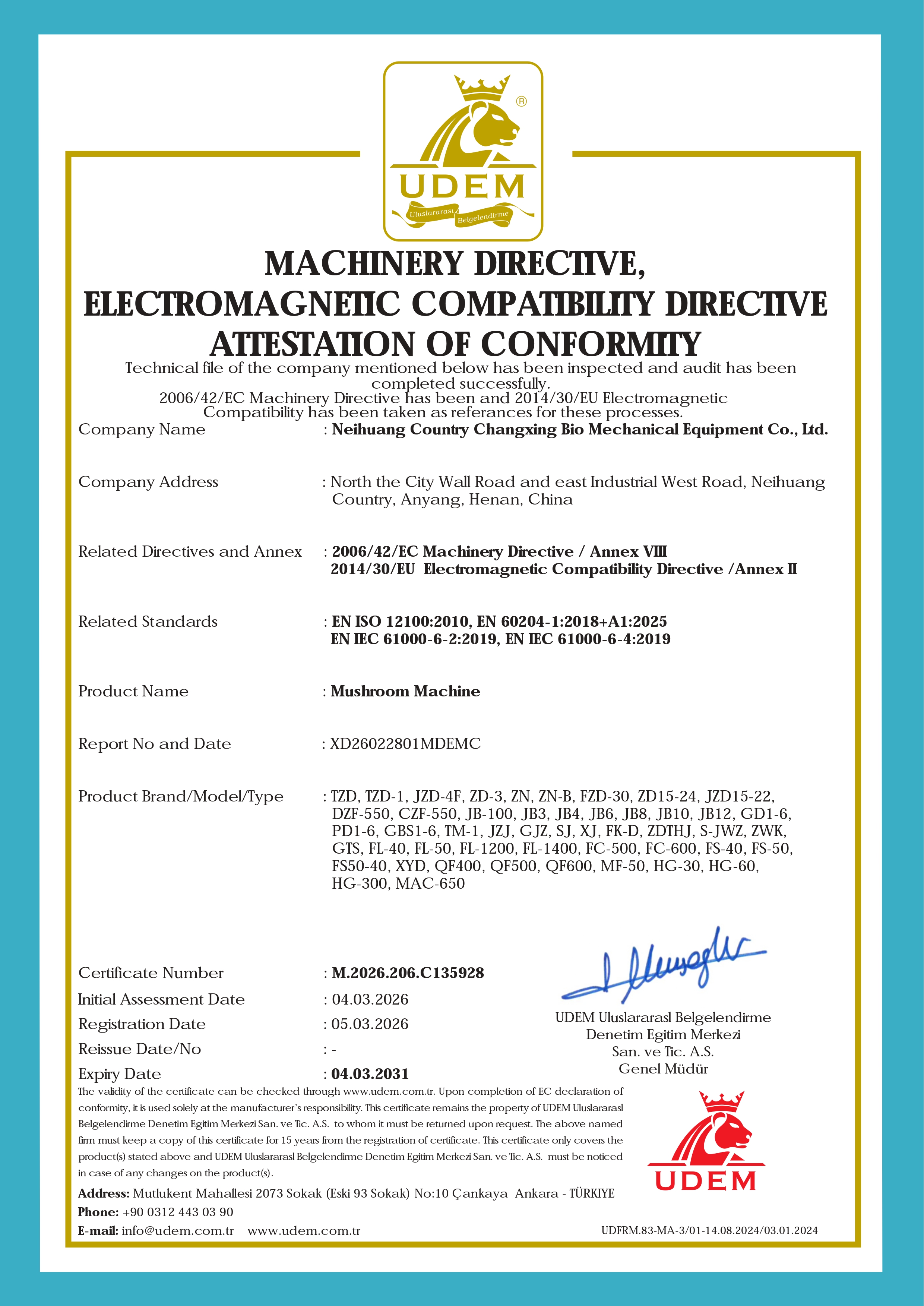
CE Attestation of Conformity No. M.2026.206.C135928, issued by UDEM, valid to 4 March 2031.
What after-sales communication should look like over the lifecycle
Service quality in this industry is rarely about a dramatic intervention. It is about whether a technical answer arrives while the production line is still usable.
Changxing's documented after-sales model combines remote support with a professional technical team that visits growers, resolves equipment usage problems and provides technical guidance. That model fits the way the equipment is designed: operator interfaces are intentionally simple, and mushroom farmers require only basic training to get started — a deliberate choice that reduces the number of problems that escalate into service calls.
Export geography is a useful proxy for lifecycle service experience. Roughly 60% of Changxing output is exported, with South Korea, Malaysia, Central Asia, Europe and Russia as the main markets — five regions with different voltages, languages, climates and support expectations.
From First Inquiry to Accepted Equipment: A Practical Sequence
The following sequence reflects how these projects are usually structured, and it doubles as a checklist for the acceptance conversation.
- Define output and bag size. State target bags per day, bag length and width, maximum filling height, mushroom variety and available power supply before discussing models.
- Request a configuration, not a catalog number. Station count (2-Station versus 4-Station), single-unit versus integrated line, and optional downstream modules should all be decided here.
- Confirm commercial terms. Minimum order quantity is 1 unit for Changxing equipment, monthly production capacity is 1,000 units, and standard production lead time is 30–55 days.
- Freeze the specification. Voltage (AC 380V 50Hz or AC 220V 50Hz), rated capacity, bag size range, construction material and control brand list.
- Production and in-house testing. Units undergo 100% test before delivery under ISO-standard quality control.
- Prepare the site. Stable foundation, 380V three-phase supply where required, and compressed air at 0.5–0.7MPa for pneumatic equipment.
- Install, commission and train operators. Operation is designed for straightforward adoption after basic training.
- Move into lifecycle support. Remote technical support, spare-part and troubleshooting communication, and follow-up technical guidance from the technical team.
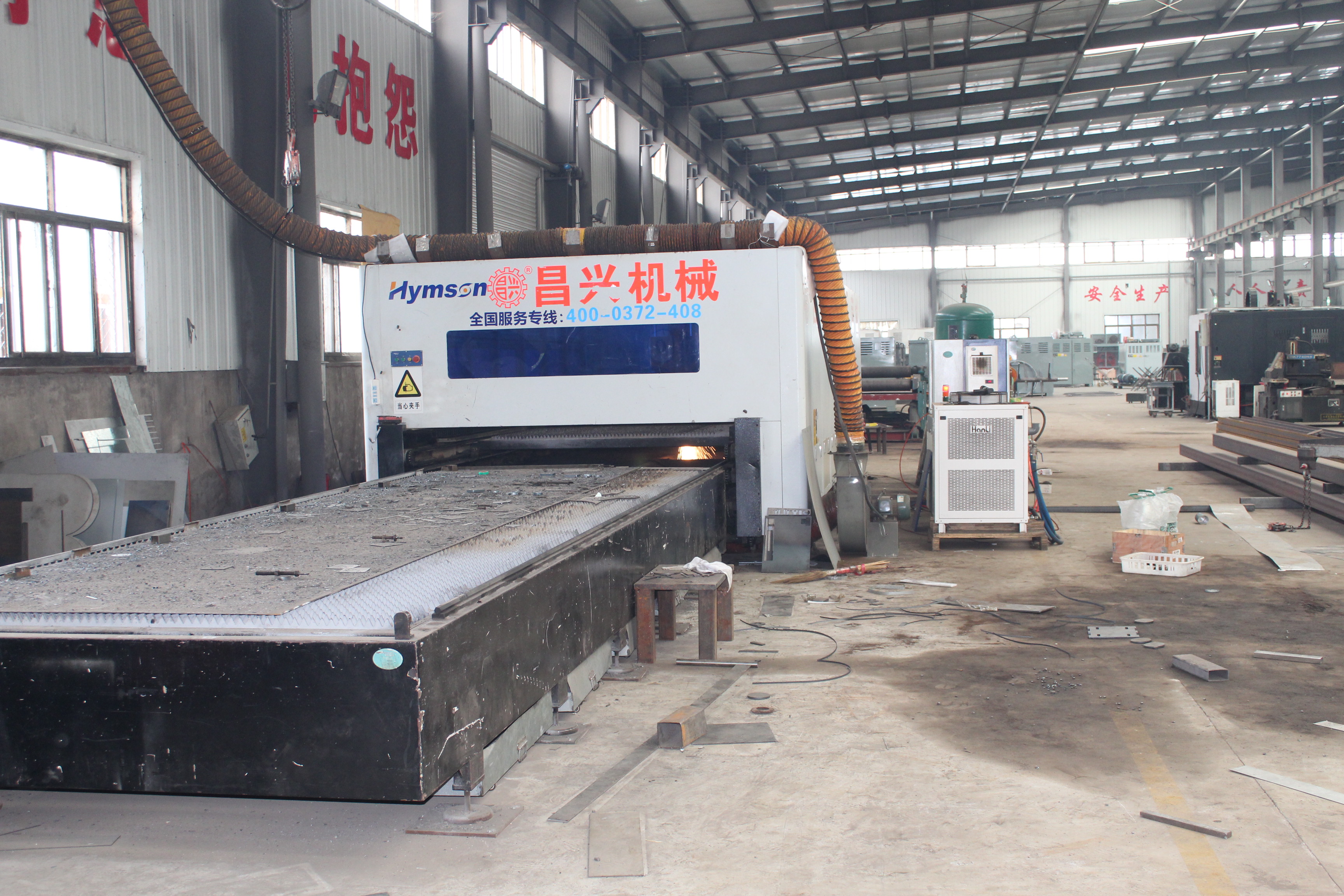
In-house laser processing supports the tolerance-dependent parts of a bagging line — which is what acceptance checks ultimately measure.
Where These Partnership Terms Matter Most
Two documented project scenarios show how acceptance, alignment and support questions differ by market.
South Korea — continuous indoor production. The application scenario is continuous operation at normal temperature in an indoor workshop, using an edible mushroom automatic production system that handles bagging for oyster mushroom, shiitake mushroom, black fungus and pearl oyster mushroom. The matched equipment set includes automatic bagging manipulators, mixer, conveyor, material distributor and basket loader. The stated site requirements are a 380V three-phase power supply, a stable foundation and trained operators.
Malaysia — integrated high-volume output. A second documented scenario integrates a mixer, elevator, material distributor and automatic bagging and tying machine into a single system described as reaching nearly 80,000 bags per day, covering enoki mushroom, king oyster mushroom, pearl oyster mushroom, shiitake mushroom and snow fungus. The stated requirements are 380V three-phase power, a stable flat foundation, compressed air if pneumatic modules are used, and operation by trained personnel only.
Multi-market export record. Across mushroom farms, planting bases, agricultural equipment distributors and agricultural enterprises, annual export volume is documented at 20+ units to South Korea, Malaysia, Russia and the United Kingdom, with a 5-year operating duration, stable operation and bagging speed above 1,000 bags per hour — a configuration class consistent with the ZD15-24 and ZN-B ratings.
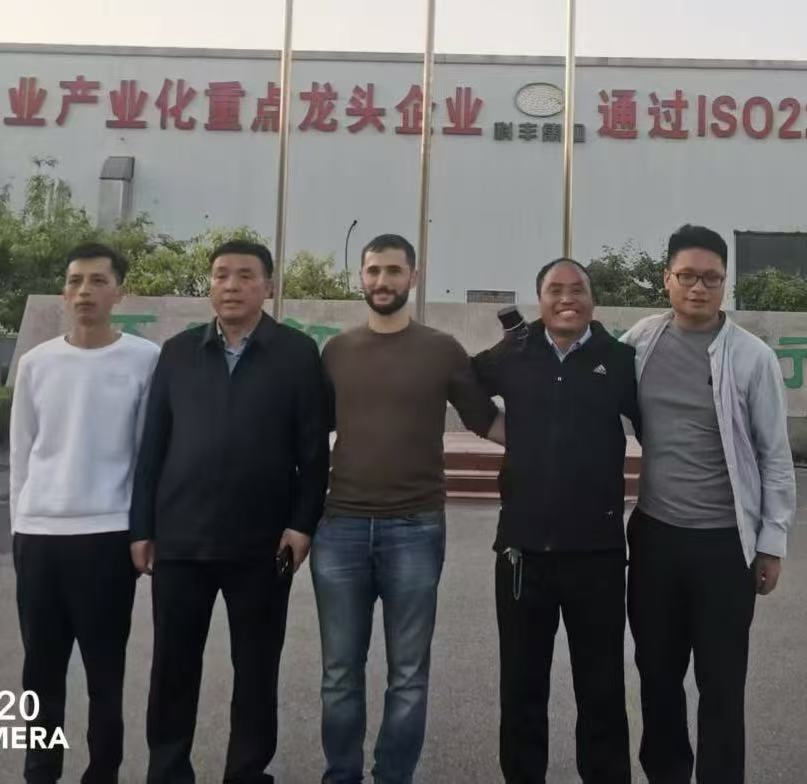
Factory inspection before ordering is a standard step for buyers validating acceptance criteria.
Comparing Configurations Commonly Written Into Partnership Agreements
Configuration choices are usually decided by three variables: required daily output, bag geometry and available power supply. The table below summarises documented specifications across the most frequently specified units.
| Configuration | Rated capacity | Power input | Supported bag size | Main construction |
|---|---|---|---|---|
| 2-Station Production Line (bagging & sealing) | 15,000 bags/day | AC 380V 50Hz | Length 14–22cm, width 28–63cm | Carbon Steel / SS304 |
| 4-Station Production Line (bagging & tying) | 25,000 bags/day | AC 380V 50Hz | Length 14–22cm, width 28–63cm | Carbon Steel / SS304 |
| 4-Station Production Line (black Termitomyces) | 50,000 bags/day | AC 380V 50Hz | Length 14–22cm, width 28–37cm | Carbon Steel / SS304 |
| ZN-B Integrated Bagging & Tying Machine | 7,000–8,000 bags/h | AC 380V 50Hz | Multiple mushroom bag sizes | Carbon Steel / SS304 |
| ZD15-24 Automatic Stamping Bagging Machine | 1,200–1,500 bags/h | AC 380V 50Hz | Flat width 15–22cm, filling height ≤19cm | Carbon Steel / SS304 |
| TZD Pneumatic Automatic Bagging Machine | 700–900 bags/h | AC 220V / 380V 50Hz | Length 28–60cm, width 12–25cm | Carbon Steel / SS304 |
| ZD-3 Small Friction Clutch Bagging Machine | 400–600 bags/h | AC 220V 50Hz | Length 28–60cm, width 12–25cm | Carbon Steel / SS304 |
FAQ: Acceptance, Service and Long-Term Support
1. Is the equipment CE certified, and which directives apply?
Yes. Changxing Edible Mushroom Machinery holds CE Attestation of Conformity No. M.2026.206.C135928, issued by UDEM on 5 March 2026 and valid until 4 March 2031. The certificate covers mushroom machinery (bagging and tying machine) and documents conformity with the EU Machinery Directive (2006/42/EC) and the EMC Directive (2014/30/EU). The harmonised standards listed are EN ISO 12100:2010, EN 60204-1:2018+A1:2025, EN IEC 61000-6-2:2019 and EN IEC 61000-6-4:2019. Buyers preparing a technical file should request the certificate copy with the order documents.
2. Can one supplier align bagging, tying and inoculation equipment with our bag size and daily output?
Within documented ranges, yes. Production lines cover bag length 14–22cm and width 28–63cm at 15,000, 25,000 or 50,000 bags per day depending on configuration. The ZN-B integrated bagging and tying machine is rated at 7,000–8,000 bags/h on AC 380V 50Hz, and the ZD15-24 stamping bagging machine at 1,200–1,500 bags/h for flat width 15–22cm bags with filling height ≤19cm. For inoculation, the CJZQ-1 handles flat width 14–22cm and length 40–60cm bags at 1,240 bags/h, while the dual-station CX-JZJ is rated at 2,500–2,800 bags/h on AC 380V 50Hz. Where a bag falls outside these windows, it should be raised at configuration stage — customization in equipment dimensions, production efficiency and applicable mushroom varieties is part of the ODM / R&D scope, supported by a 25-engineer R&D team.
3. What drives the cost of a line, and is there a minimum order quantity?
The minimum order quantity for Changxing equipment is 1 unit. Cost is driven by configuration rather than by a single list number: the number of bagging stations (2-Station versus 4-Station), rated capacity class, optional downstream modules such as automatic ring sleeving, notch inserting, integrated bagging and tying, and tray loading equipment, plus customization for equipment dimensions and workshop layout. Because lines are configured per site, comparing headline numbers between suppliers without matching station count, capacity, bag size window and material specification is not a meaningful comparison. A configuration-specific quotation is the accurate input for budgeting.
4. Can we validate the equipment before committing to a full line?
Two documented options support early validation. First, because the minimum order quantity is 1 unit, a single machine can be ordered as a validation unit before a full line is committed. Second, every unit undergoes 100% test before delivery under ISO-standard quality control. Buyers from South Korea, Malaysia, Russia and the United Kingdom have visited the factory for inspection and ordering, and roughly 60% of output is exported across South Korea, Malaysia, Central Asia, Europe and Russia — so the validation process is not limited to domestic buyers.
5. What is the production lead time, and what support continues afterwards?
Standard production lead time is 30–55 days, supported by a monthly production capacity of 1,000 units and an annual output of 10,000 units from a 20,000m² facility with 130 employees. After delivery, support continues through remote technical assistance and follow-up technical guidance from a professional technical team, with a focus on resolving equipment usage issues on site. Operators require only basic training to run the equipment, which shortens the gap between delivery and stable production. If your project has a fixed commissioning window, share it at the configuration stage so it can be reflected in the production schedule.
Conclusion: What a Defensible Partnership Looks Like
Acceptance, alignment and support are not abstract values in this industry. Acceptance is a voltage, a rated capacity, a bag size window and a material specification that can be checked against a document. Alignment is a configuration decision made before the order, not after installation. Support is measured by how quickly a technical answer reaches a grower who is already running continuous shifts.
The practical test for any partnership is whether the supplier's claims can be dated, numbered and verified — a certificate number, a capacity rating, a named component, a stated lead time. Where those exist, the rest of the relationship has a foundation to stand on.
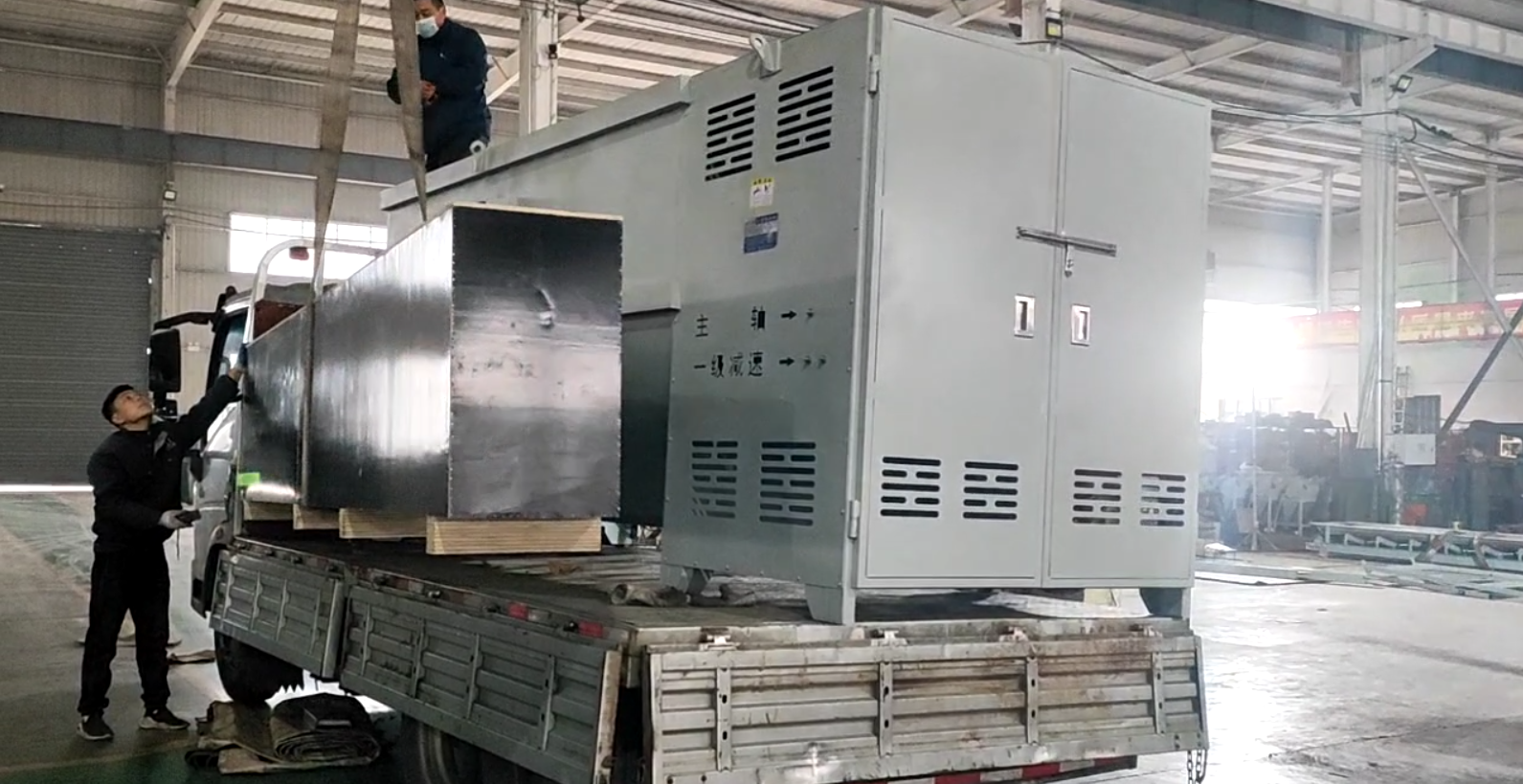
Documented specification, documented testing, documented delivery.
Next step: send your target daily output, bag length and width, mushroom variety and power supply. You will receive a configuration-specific quotation, the relevant specification sheet, and a validation-unit plan under the 1-unit minimum order quantity.
Changxing Edible Mushroom Machinery — Neihuang County Changxing Biological Machinery Equipment Co., Ltd. (established 2009)
Website: www.automushmachinery.com
Email: nhchangxing@outlook.com
Tel / WhatsApp: +86 13103721233
Address: Henan Neihuang, China
Have Questions or Need More Details?
Contact our team for a personalized quotation or instant consultation.
Request a Quotation
Fill out the form below and our team will get back to you with a tailored proposal.
WhatsApp Direct Chat
Prefer to chat in real-time? Message us on WhatsApp for instant assistance & quick answers.
- Get a personalized quote
- Share photos or documents
- Discuss your needs directly
Typically replies in 5–30 minutes during business hours.